
Traditional Moroccan Cuisine: A Flavor Journey Through History
Traditional Moroccan Cuisine: A Flavor Journey Through History
The air in the Marrakech souk is thick with a golden haze of dust and spice. You can taste the atmosphere — a complex layering of smoky cumin from a nearby stall, the floral whisper of saffron threads drying in the sun, and the deep, caramelized sweetness of lamb slow-cooking in a clay tagine over charcoal. A vendor hands you a small glass of mint tea, the leaves freshly picked from gardens in the Middle Atlas, the sugar syrup bubbling in a silver pot. This is not a meal; it is a sensory manuscript. **Traditional Moroccan Cuisine: A Flavor Journey Through History** reveals a food culture that is a living archive of Berber resilience, Arab refinement, Andalusian artistry, and Mediterranean exchange. Every dish tells a story of conquest, trade, and community. This article peels back the layers of that story — from the foundational Berber techniques to the spice-laden masterpieces of Fes, from the communal rituals of Friday couscous to the modern chefs reinventing these ancient flavors. By the end, you will understand that Moroccan food culture is not simply about sustenance; it is a delicious, edible history lesson served on a communal platter.
The Historical Layers Behind the Moroccan Table
The roots of Moroccan cooking stretch back thousands of years to the indigenous Berber communities who first domesticated the arid landscapes of the Atlas Mountains and the Sahara fringes. These communities established the bedrock of the cuisine: the conical clay tagine pot, designed to trap moisture and cook tough cuts of meat slowly with minimal water; the tradition of hand-rolling semolina couscous grain by grain; and the art of preserving meats like khlea (dried, spiced beef) to survive long winters and nomadic journeys. This was a cuisine born of necessity, resourcefulness, and a profound respect for the land's limited gifts.
A seismic shift occurred with the Arab conquest of the 7th and 8th centuries, followed by the influx of Moorish refugees from Andalusia in the 15th and 16th centuries. This wave introduced sophisticated pastry-making, the liberal use of almonds, sugar, and rose water, and the complex layering of spices that defines dishes like pastilla. The city of Fes, founded by Andalusian exiles, became a crucible of this refined gastronomy. Later, the French protectorate (1912-1956) left a subtle but distinct imprint, introducing café culture, patisserie techniques, and the concept of the multi-course meal structure, which blended with existing traditions rather than replacing them. Meanwhile, trans-Saharan trade caravans brought dates from the oasis towns of Tafilalt, grains from the Sahel, and salt from the mines of Taghaza, weaving Morocco into a vast economic and culinary network that stretched from Europe to sub-Saharan Africa.
The Spice Map: What Defines Moroccan Flavor Profiles
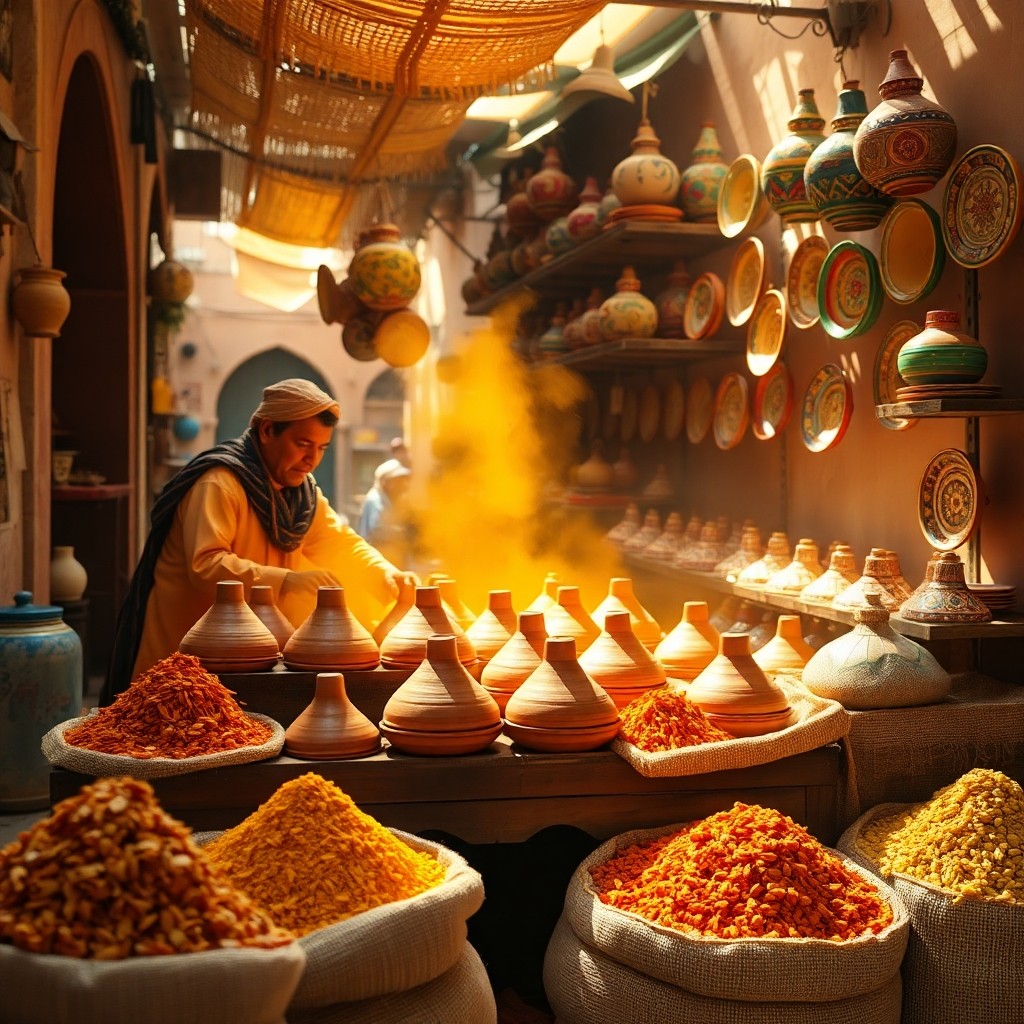
*A photorealistic editorial-style scene capturing the vibrant, spice-filled air and traditional tagine displays inside the historic Marrakech souk.*
To understand Moroccan flavor, you must first decode Ras el Hanout, the iconic spice blend whose name translates to "head of the shop" — meaning the best the spice merchant has to offer. This is not a single recipe but a cultural code. A typical blend in Fes might contain over 30 ingredients, including grains of paradise, orris root, dried rosebuds, cubeb pepper, and mace. Each component carries symbolism: saffron for wealth and hospitality, cumin for warmth and health, cinnamon for sweetness and status. The specific blend is a closely guarded secret of each spice shop, a signature of their expertise.
Beyond Ras el Hanout, three pillars form the backbone of savory Moroccan cooking. Saffron, grown in the Taliouine region, provides a luxurious, earthy-golden hue and aroma. Cumin, often dry-roasted before grinding, adds a smoky, grounding depth. Preserved lemons, salt-cured for months, contribute a unique, intensely sour-salty-umami punch that cuts through rich meats and stews. This mastery of aromatic warmth is distinct from chili heat; Moroccan cuisine rarely burns the palate but instead builds complex, layered warmth through ginger, white pepper, and paprika.
A defining characteristic is the deliberate sweet-savory fusion, a direct legacy of medieval Arab gastronomy. This is not an accidental pairing but a calculated balance. Lamb tagine with prunes or apricots, chicken with caramelized onions and raisins, and pastilla dusted with cinnamon and powdered sugar all exemplify this principle. The sweetness counterpoints salt and spice, creating a harmonious and sophisticated flavor profile that is uniquely Moroccan.
Iconic Dishes and Their Regional Stories
The tagine is both a vessel and a technique, and its interpretation varies dramatically by region. In Fes, you find sweet tagines with lamb, almonds, and honeyed onions, reflecting the city's Andalusian heritage. Marrakech, closer to the agricultural plains, favors bold combinations of chicken with preserved lemon and olives. In the Atlas Mountains, where meat was historically scarce, vegetable-forward tagines featuring artichokes, peas, and carrots dominate. The conical lid of the tagine pot is engineering genius: it traps steam, condenses it, and returns it to the dish, allowing for slow, braised cooking with minimal liquid.
Couscous is far more than a side dish; it is a weekly ritual and a marker of identity. Every Friday, after midday prayers, families gather to share a large platter of fluffy, hand-rolled couscous, topped with a stew of seven vegetables (symbolizing the seven days of creation) and tender lamb or chicken. The technique of rolling the semolina by hand to the perfect size is a skill passed down through generations. In 2020, this knowledge and practice were inscribed on UNESCO's Representative List of the Intangible Cultural Heritage of Humanity, recognizing its role as a pillar of community and family life.
Pastilla (or B'stilla) is the crown jewel of celebratory cuisine, a dish that encapsulates Morocco's sweet-savory genius. Originating in Fes, the traditional version uses pigeon (or now, often chicken) slow-cooked with onions, ginger, saffron, and cinnamon, then layered with a crunchy warqa pastry and a topping of almonds fried in butter and sugar. The final dusting of powdered sugar and cinnamon creates a textural and flavor contrast that is breathtaking. In coastal cities like Casablanca, modern adaptations feature seafood — shrimp and squid in a fragrant tomato sauce — proving the dish's enduring versatility.
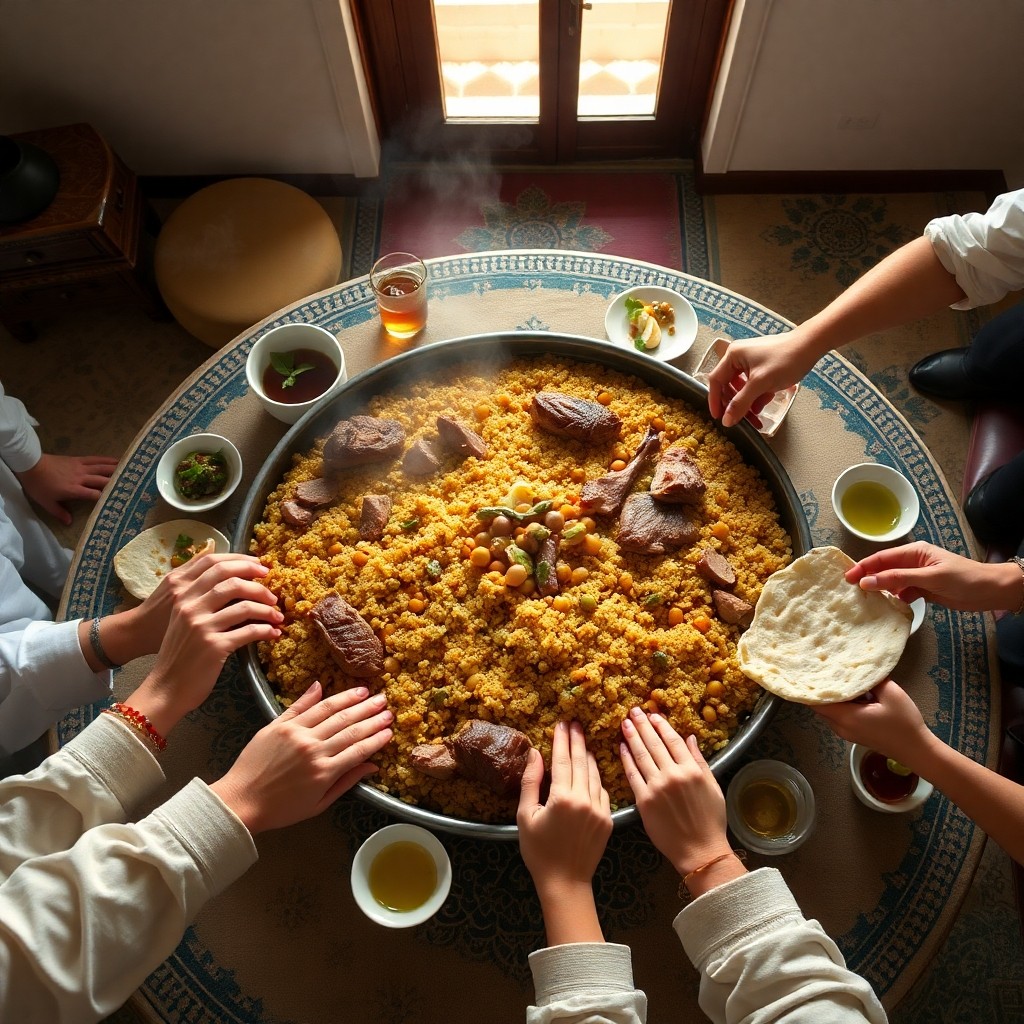
*An overhead photorealistic shot of a large traditional Moroccan couscous platter in a riad setting, capturing the communal dining ritual central to Moroccan food culture.*
The Social Architecture of Moroccan Dining
In Morocco, how you eat is as important as what you eat. The mint tea ceremony is a profound act of hospitality and diplomacy. The tea is poured from a height into small glasses, creating a frothy head. The first glass is for the guest, symbolizing life; the second, for the host, symbolizing love; the third, for the spirit, symbolizing death. Each glass has a distinct flavor — the first is gentle and aromatic, the second sweeter, the third more bitter. Refusing a glass, particularly the first, can be seen as a slight.
Meals are typically communal, served on a large central platter. Diners sit on cushions and eat with their right hand, using pieces of round, crusty khobz bread as a utensil to scoop food. The host will often select the choicest pieces for guests, a gesture of generosity. Discarding bread is considered deeply disrespectful, as it is seen as a blessing from God.
The rhythm of the year is marked by specific foods. During Ramadan, the daily fast is broken with harira, a rich tomato, lentil, and chickpea soup, and chebakia, honey-soaked sesame pastries. Briouats, small triangular pastries filled with meat or cheese and fried, are ubiquitous at celebrations. These foods are not just seasonal; they are edible calendars, connecting the community to its spiritual and agricultural cycles.
Preserving Heritage in Modern Moroccan Kitchens
The primary guardians of Moroccan culinary knowledge are the grandmothers, known as dadas. They are the living repositories of recipes that are never written down, teaching through observation and repetition in the kitchen. However, as younger generations move to cities and adopt busier lifestyles, there is a real risk of this oral tradition fading. Several initiatives, including community cooking schools and digital archives, are working to record these techniques before they are lost.
A new generation of chefs is reinterpreting tradition without abandoning it. In Casablanca and Marrakech, chefs like Mohad Al-Masri and Maria Marou are taking classic dishes and applying modern plating, fermentation techniques, or global flavor pairings. This is not fusion for its own sake but a dialogue between past and present, ensuring the cuisine remains dynamic and relevant.
Meanwhile, the street food scene, epitomized by the legendary Jemaa el-Fna square in Marrakech, is experiencing a renaissance. Vendors sell snail soup, spicy merguez sausages, and steaming bowls of bessara (dried fava bean soup) to locals and tourists alike. This vibrant, accessible cuisine is a powerful force for cultural preservation, keeping traditional flavors at the heart of everyday Moroccan life.
Conclusion
Traditional Moroccan Cuisine: A Flavor Journey Through History is a palimpsest — a manuscript where each layer of history remains visible and tangible. From the Berber tagine to the Andalusian pastilla, from the spice-laden markets to the communal Friday couscous, every bite carries the weight and joy of centuries. Understanding this history transforms your experience from simple consumption to cultural literacy. You begin to taste not just cumin and saffron, but the resilience of the Berber people, the artistry of Fes, and the generosity woven into the fabric of Moroccan society. The future of this cuisine depends on a delicate balance: honoring the dadas' wisdom while embracing innovation. Whether you are planning a trip to Morocco, attempting your first tagine at home, or simply exploring global food cultures, you are now part of this ongoing story. Let your next meal be an invitation to explore further — seek out a Moroccan restaurant, try a new spice, or learn to hand-roll couscous. The journey through flavor is endless.
Frequently Asked Questions (FAQ)
**Q1: What makes Moroccan cuisine different from other North African cuisines?** Moroccan cuisine is distinguished by its unique sweet-savory fusion, the complex layering of spices in blends like ras el hanout, and the profound influence of Andalusian pastry-making. While Tunisian food leans towards fiery harissa, Moroccan cooking emphasizes aromatic warmth and balance.
**Q2: What is the most historically significant dish in Morocco?** Couscous, with its Berber origins and UNESCO recognition, is arguably the most significant, representing community and heritage. Pastilla, with its layered history from Fes, is equally iconic for its culinary sophistication and symbolic role in celebrations.
**Q3: How did trade routes shape Moroccan food?** The trans-Saharan trade brought dates, grains, and salt, while the spice route introduced saffron, cumin, cinnamon, and ginger. These ingredients, combined with indigenous Berber techniques, created a cuisine that is a direct product of Morocco's position as a crossroads.
**Q4: Is Moroccan food spicy hot?** No, Moroccan cuisine is not primarily spicy hot. It focuses on aromatic warmth from spices like ginger, saffron, cumin, and cinnamon. Chili peppers are used sparingly, if at all, distinguishing it from the hotter cuisines of neighboring Tunisia.
**Q5: What role does bread play in Moroccan meals?** Khobz bread is both a utensil and a cultural symbol. It is used to scoop food and is central to every meal. It is considered a blessing and is never discarded, reflecting deep cultural values of respect for food and hospitality.
**Meta Description:** Explore traditional Moroccan cuisine as a living history of Berber, Arab, and Andalusian influences. Discover iconic dishes, spice rituals, and dining customs in this flavor journey.