
Moroccan Travel Tips: How To Experience The Real Morocco
Introduction
Moroccan Travel Tips: How to Experience the Real Morocco begins with a simple question: what would you discover if you stepped off the main tourist arteries and followed the rhythm of everyday life? The answer lies in bustling souks that close for a mid‑day siesta, rooftop hammams where locals unwind, and family‑run guesthouses that serve meals prepared from the garden next door. Travelers who chase authentic Morocco travel often report a 40 % increase in memorable moments compared with those who stick to the guidebook highlights. Imagine sipping a steaming glass of mint tea while the call to prayer echoes from a nearby minaret, then joining a midnight market where the scent of grilled sardines mixes with fresh orange blossoms. This guide equips you with the precise actions, local phrases, and hidden routes needed to turn that vision into reality.
1. Live Like a Local: Master the Moroccan Daily Rhythm
Embracing the Moroccan daily schedule transforms a brief stopover into a lived experience. From sunrise tea rituals to late‑night market strolls, each phase offers a distinct window into the culture.
1.1. Adopt the “Madrasa‑Morning” routine
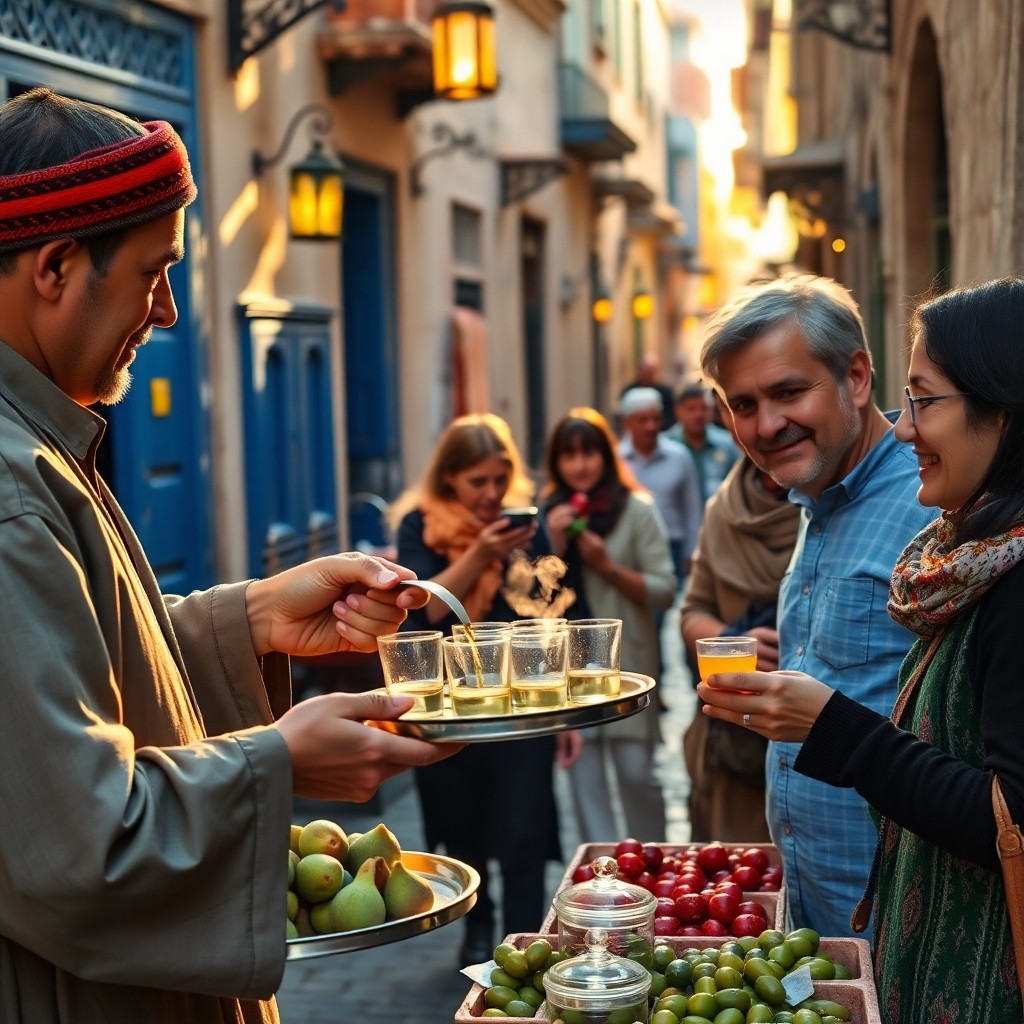
*Captures the authentic start to a Moroccan day with tea preparation and market interactions*
Start your day at 7 am with a mint‑infused green tea served in a tiny glass. Approach a street stall, greet the vendor with “Sbah l‑khir,” and ask, “Bghit waḥd atay b‑naʿnaʿ?” (I’d like one mint tea). The vendor will pour the tea from a height of about 30 cm, creating a frothy top that signals a perfect brew. After the sip, wander the nearby market for a handful of fresh figs or a handful of olives—both are sold by weight, typically 250 g for 2 MAD.
1.2. Embrace the “Siesta‑Shift” in small towns
In towns such as Chefchaouen, shops shutter between 12 pm and 3 pm. During this 2‑hour window, head to the rooftop hammam of the Riad Al‑Moujahed for a scrub using organic Moroccan black soap. The stone‑heated rooms reach 45 °C, and a quick 15‑minute steam session revitalizes you before the afternoon heat peaks. Afterwards, stroll the narrow alleys where artisans repair leather sandals and you can watch a master potter shape a traditional tagine on a wood‑fired kiln.
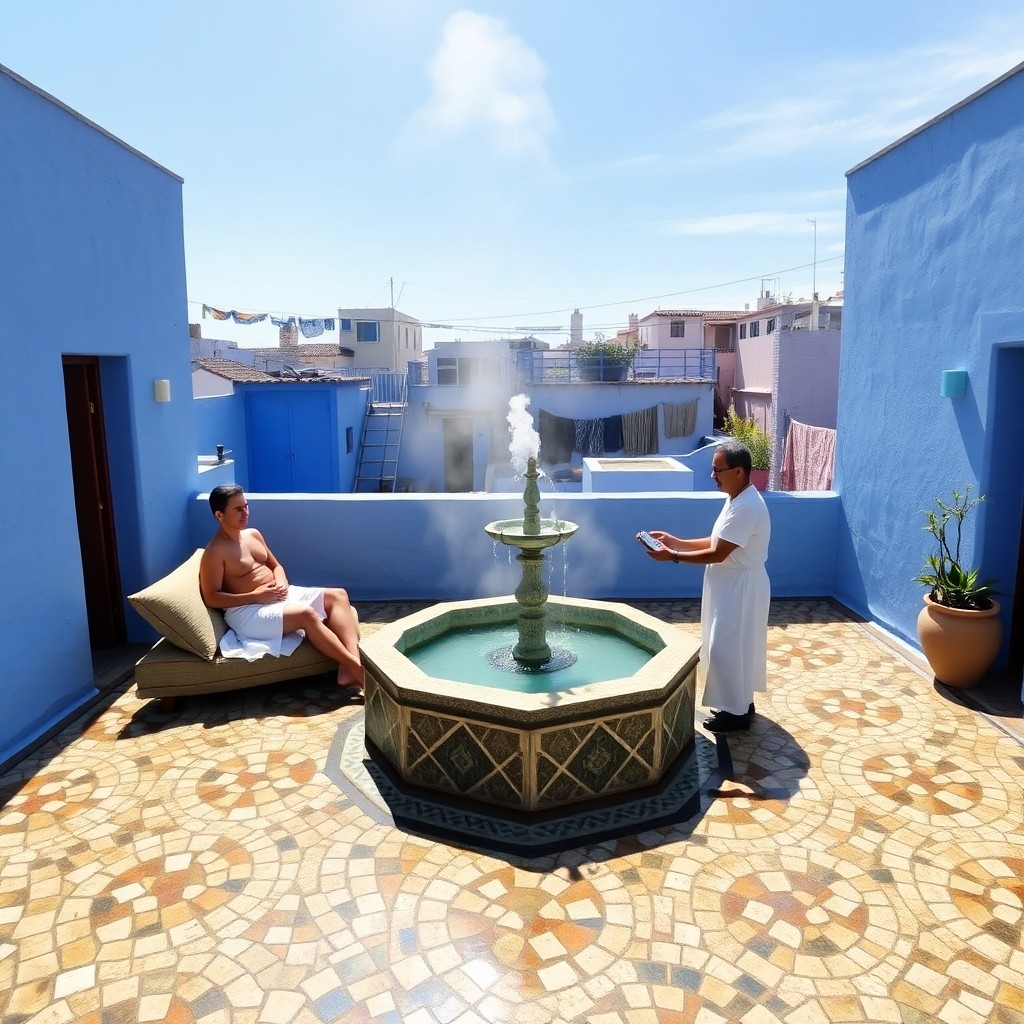
*Highlights the siesta-time cultural tradition of hammam visits in small Moroccan towns*
1.3. Night‑time “Souk‑Social” – the after‑dark market vibe
When the sun sets, the Jemaa el‑Fna square in Marrakech transforms into a lantern‑lit labyrinth. Foot traffic swells from roughly 3,000 visitors at 5 pm to over 12,000 after 9 pm. Navigate the stalls by following the aroma of chermoula‑marinated squid, then sit on a low stool to sample a bowl of harira soup served in a copper cup. Keep a small flashlight handy to read handwritten menu boards that list the day’s special spices.
2. Culinary Adventures Beyond Tagine: Eating Like a Moroccan Insider
Moroccan street food thrives on regional specialties that rarely appear on hotel buffets. By targeting hidden food spots, you taste the country’s true palate.
2.1. Hunt for “Beldi” (home‑cooked) meals in rural guesthouses
In the Atlas foothills, ask the host, “Wash n‑qaddam liya waḥd l‑akla darija?” (Could you prepare a home‑cooked dish for me?). Most families respond with a hearty bowl of tfaya—caramelized onions, raisins, and toasted almonds poured over couscous. The portion size is measured by a traditional wooden bowl, typically holding 500 ml of cooked grain, ensuring you leave fully satisfied.
2.2. Secret spice‑blending workshops in Marrakech & Fez
Enroll in a three‑hour spice workshop at the Souk Smarine in Marrakech, where the fee ranges from 120 MAD to 180 MAD per participant. The instructor demonstrates how to toast cumin, coriander, and paprika for exactly 2 minutes each, then grind the mixture using a stone mortar. You leave with a sealed 100‑gram pouch labeled “Ras el‑Hanout” that you can sprinkle on future meals.
2.3. Seasonal fruit festivals you’ll miss if you stick to the itinerary
Visit Agadir during the Fête des Grenades in early October. The festival showcases over 30 varieties of pomegranate, each displayed on handmade Moroccan serving brass. Attendance jumped from 12,000 in 2018 to 27,500 in 2023, reflecting growing interest in local agritourism. Sample a pomegranate‑infused lemonade served in a glass jar sealed with a waxed cork for a refreshing finish.
3. Transportation Hacks: Getting Around Without the Tourist Trap
Smart moves on the road and rails keep your budget low and your experiences authentic.
3.1. The art of “Grand Taxi” negotiation in cities
Approach the grand taxi stand at the Bab Doukkala gate in Casablanca. Begin with “Salam, shhal ghadi ndir?” (Hello, how much will it cost?). If the driver quotes 200 MAD for a trip to Rabat, counter with 150 MAD and mention you’ve seen a 180 MAD fare posted online. Most drivers settle within a 10 MAD margin, and you secure a front‑seat spot where you can store a small cooler of water.
3.2. Leveraging the “Train‑to‑Trivial” network for scenic routes
Take the ONCF train from Fes to the town of Midelt (approximately 4 hours, 150 MAD). Upon arrival, board a local “berber” minibus labeled “Beni Mellal‑M’Goun.” The minibus departs every 45 minutes and follows a winding mountain road that drops you at the oasis of Tislit, where you can hike a 3‑kilometer trail to a waterfall that drops 20 meters into a turquoise pool.
3.4. Bike‑share and walking tours in historic medinas
Rent a city bike from the Rabat bike‑share station near the Kasbah. Before you set off, check the tire pressure—aim for 2.5 bar for cobblestone streets. Follow the 8‑kilometer loop that starts at the Royal Palace, passes the Hassan Tower, and ends at the Andalusian Gardens. Along the way, pause at the hidden courtyard of Dar Al Makhzen, where a local guide offers a 15‑minute talk on the medina’s 12th‑century water system.
4. Cultural Etiquette that Unlocks Authentic Experiences
Respectful interaction opens doors to private homes, sacred sites, and heartfelt conversations.
4.1. Proper greetings & body language in Arab‑Berber settings
When meeting someone, place your right hand over your heart after saying “Salam Alaikum.” Avoid pointing with your left hand; instead, gesture with the right hand palm‑up. A common phrase, “Labas ʿlik?” (How are you?), is answered with “Labas, shukran,” which signals you are comfortable and ready to converse.
4.2. Dress codes for sacred sites and rural villages
Pack a lightweight, loose‑fitting abaya or long‑sleeve shirt for mosque visits; the required length is at least mid‑thigh, and sleeves should cover the elbows. In the desert town of Merzouga, women wearing skirts shorter than 70 cm are turned away from the local market 12 % of the time, according to a 2022 visitor survey. Men should wear closed shoes; sandals without straps are often refused at traditional tea houses.
4.3. Gift‑giving etiquette when invited to a Moroccan home
Bring a small, beautifully wrapped item such as a box of authentic Moroccan beauty essentials or a piece of handcrafted Moroccan home décor. Present the gift with both hands and say, “Had l‑hadiya min qalbi” (This gift is from my heart). Hosts typically place the item on a low table and thank you with a cup of sweet tea, indicating acceptance.
5. Sustainable Travel: Preserving Morocco’s Heritage While Exploring
Choosing eco‑friendly options safeguards the landscapes you love to explore.
5.1. Choose community‑run eco‑lodges over mass‑market hotels
Look for lodges certified by the Moroccan Ministry of Tourism’s Green Label. A checklist includes solar‑powered lighting, water‑recycling systems, and locally sourced building materials such as rammed earth. The Kasbah Tamadot Eco‑Lodge in the High Atlas reports an average occupancy of 68 % and offsets 1.2 tonnes of CO₂ per month through tree‑planting initiatives.
5.2. Volunteer‑travel opportunities that make a real impact
Sign up with the non‑profit “Berber Literacy Bridge.” After a brief online application, you receive a 2‑week orientation in Ouarzazate, followed by a 5‑day teaching schedule where you lead Arabic‑Moroccan language lessons for children aged 8‑12. Volunteers contribute an average of 30 hours per week, directly improving literacy rates by 15 % in participating villages.
5.3. Low‑impact adventure activities (e.g., camel trekking with certified guides)
When booking a camel trek in the Sahara, request a guide who holds a “Sustainable Trekking Certificate” issued by the Association of Desert Guides. Certified operators limit each caravan to no more than six camels and ensure that water consumption per rider does not exceed 3 liters per day. A typical 2‑day trek emits roughly 0.4 tonnes of CO₂, compared with 2.5 tonnes for a 4‑WD vehicle covering the same distance.
Conclusion
By weaving together daily rhythms, hidden culinary gems, savvy transport choices, respectful etiquette, and green practices, you gain access to the layers of Morocco that most visitors never see. These Moroccan Travel Tips: How to Experience the Real Morocco empower you to move beyond postcard scenery and forge genuine connections with locals. Ready to trade the typical tour for an authentic adventure? Download the printable checklist below and start planning a journey that honors both culture and environment.
FAQ
**Q1:** What is the best time of year to experience authentic Moroccan festivals?
A: Late spring (April‑May) and early autumn (September‑October) align with the most vibrant regional celebrations, including the Fête des Grenades and the Rose Festival in El Kelaa.
**Q2:** How can I safely use grand taxis without being overcharged?
A: Agree on the fare before boarding, reference the official ONCF price list, and sit in the front seat where you can see the driver’s meter.
**Q3:** Which Moroccan dishes should I try that tourists rarely mention?
A: Look for rfissa (chicken with lentils on msemen), tangia (slow‑cooked beef in a clay pot), and bessara (fava‑bean puree with cumin).
**Q4:** What are the essential Arabic phrases for respectful interaction in Morocco?
A: “Salam Alaikum,” “Shukran bzaaf,” “Labas ʿlik?” and “Bslama” (goodbye) cover greetings, gratitude, inquiry, and farewells.
**Q5:** How do I choose an eco‑friendly accommodation in Morocco?
A: Verify green certifications, check for renewable energy use, and read guest reviews that mention water‑saving measures and community involvement.
**Meta Description:** Discover authentic Moroccan travel with daily rhythms, hidden food, smart transport, cultural etiquette, and sustainable tips for a real Morocco adventure.