
Moroccan Home Decor: Bohemian Style Design Tips
Introduction
**Moroccan Home Decor: Bohemian Style Design Tips** combine the rich, geometric heritage of Morocco with the relaxed, eclectic vibe of boho living. The mix delivers a space that feels both exotic and inviting, using saturated jewel tones, hand‑crafted textiles, and layered lighting to create depth without clutter. Modern homeowners love this hybrid because it adds warmth, color, and a sense of adventure while still fitting into open‑plan layouts and minimalist floor plans. Below are actionable strategies that go beyond generic décor advice, giving you concrete steps to transform any room into a Moroccan‑boho haven.
**Quick Answer:** > Moroccan‑boho design blends traditional Moroccan elements—like zellige tiles, lanterns, and Beni Ourain rugs—with bohemian textures, macramé, and global accessories. The result is a vibrant, layered interior that feels curated and lived‑in.
Key Takeaways
- Layered textures, vibrant yet grounded colors, and artisanal accessories define the Moroccan‑boho look. - Prioritize authentic Moroccan pieces—lanterns, rugs, ceramics—and pair them with DIY boho elements for a personalized feel. - Balance bold patterns with neutral bases to keep spaces welcoming rather than overwhelming. - Lighting acts as the secret weapon; mix traditional lanterns with macramé fixtures for depth and drama. - Curate each accessory with a story in mind to weave a cohesive narrative throughout the home.
What defines Moroccan Bohemian home decor? – The definitive answer
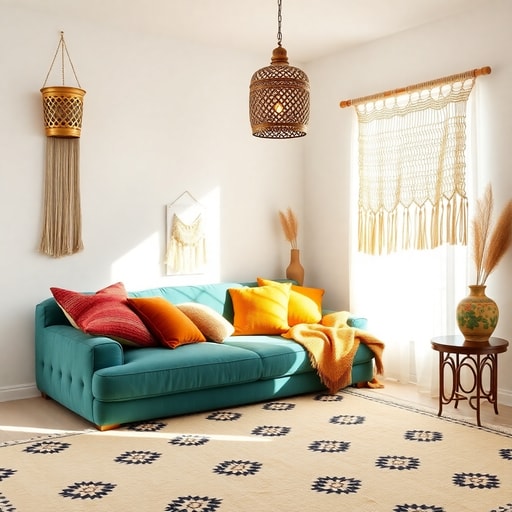
*A wide shot of a living room blending a Moroccan rug and lantern with boho textiles and natural light.*
Moroccan‑bohemian home decor is a curated blend of **handcrafted Moroccan tile patterns**, earthy **Bohemian color palette**, and free‑spirited layering that creates a lived‑in, global aesthetic.
**Definition:** Moroccan‑boho style merges the structured geometry of Moroccan design with the relaxed, eclectic sensibility of bohemian interiors, resulting in spaces that feel both historic and contemporary.
History of Moroccan aesthetics meets boho ethos
Moroccan design traces its roots to Berber Artisans, whose hand‑woven textiles and intricate zellige tiles date back centuries. These motifs traveled through Andalusian influence before reaching European travelers in the 19th century, sparking fascination with exotic interiors. The bohemian movement, emerging in the 1960s, championed artistic freedom, global travel, and a mix‑and‑match approach to décor. When the two worlds intersect, the structured geometry of Morocco softens under the boho emphasis on comfort and personal expression.
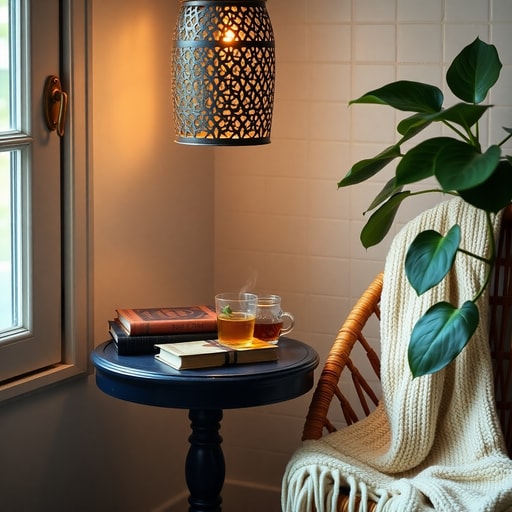
*An intimate vignette focusing on lighting, ceramics, and textiles to highlight the fusion of styles.*
Core elements: colors, patterns, textures
1. **Rich jewel tones** – sapphire, ruby, emerald, and amber dominate walls, cushions, and artwork. 2. **Intricate geometric patterns** – found in **handcrafted Moroccan tile patterns** and Berber kilim designs. 3. **Tactile natural materials** – sisal, wool, leather, and brass provide depth and warmth.
How the fusion creates a unique vibe
The psychological impact of this blend is immediate: warm colors stimulate hospitality, while layered textures invite touch, fostering a sense of adventure and cultural depth.
**Quick Answer:** > A living room anchored by a deep‑blue Beni Ourain rug, topped with a mustard‑colored macramé wall hanging, exemplifies the Moroccan‑boho vibe—rich, grounded, and inviting.
Layering textures for a tactile boho‑Moroccan space
Layered textiles are the heart of a Moroccan‑boho interior, turning flat surfaces into sensory experiences.
Selecting rugs, throws, and cushions
Begin with a foundational **hand‑knotted Beni Ourain rug** in neutral ivory or soft gray; its subtle pile showcases the room’s floor without competing with color. Add a patterned throw in teal‑blue Berber weave, then arrange cushions in descending size: a large plush pillow in turquoise, a authentic blue leather pouf, and a small embroidered cushion in magenta. This hierarchy guides the eye and creates visual rhythm.
Mixing natural fibers with metallic accents
Pair a sisal floor runner with a brass‑finished Moroccan lantern to introduce reflective sparkle. A wool‑blend throw draped over a reclaimed wood sideboard complements a copper‑tone vase, balancing softness with sheen.
Balancing density for comfort and flow
**Step‑by‑step instruction:** 1. Lay the base rug centered under the main seating arrangement. 2. Fold the patterned throw over the back of the sofa, allowing one corner to spill onto the rug. 3. Position cushions from largest to smallest, aligning the edges for a cohesive silhouette.
Color palettes that marry desert tones with boho vibrancy
Color selection sets the emotional tone and anchors the Moroccan‑boho aesthetic.
Primary desert neutrals as backdrop
Paint the walls in trending shades for 2026, such as “Sahara Sand” (a warm, muted beige) or “Casablanca Cream” (a soft ivory with a hint of gold). These neutrals act as a canvas, letting vibrant accents shine without overwhelming the eye.
Accent hues inspired by Marrakech markets
Introduce **turquoise**, **magenta**, and **ochre** through decorative pillows, ceramic vases, and woven wall hangings. A turquoise ceramic pitcher from a Marrakech souk can become a focal point on a side table, while magenta cushions add a pop of energy to a neutral sofa.
Using color zoning to guide movement
Create “color zones” by painting a single accent wall in deep indigo behind the TV, while the adjacent hallway stays in Casablanca Cream. This subtle shift directs foot traffic toward the entertainment area and highlights the focal wall, making the space feel intentional.
**Quick Answer:** > Color zoning—using a bold indigo accent wall beside a neutral hallway—helps guide movement and emphasizes key areas without adding physical partitions.
Statement lighting: From lanterns to macramé fixtures
Lighting shapes mood, defines texture, and amplifies the Moroccan‑boho narrative.
Traditional Moroccan lanterns reimagined
Modern finishes like brushed copper, smoked glass, and matte black transform classic lantern silhouettes into contemporary statements. A **Moroccan lantern lighting ideas** guide suggests pairing a brushed‑copper lantern with a reclaimed‑wood ceiling beam for an industrial‑meets‑exotic look.
DIY macramé pendant ideas
Materials: 3 mm natural jute rope, a 12‑inch reclaimed metal ring, and a wooden bead. 1. Cut eight 24‑inch strands of rope. 2. Fold in half, loop over the metal ring, and pull the ends through to create a lark’s head knot. 3. Alternate square knots and spiral knots, spacing each set about 2 inches apart. 4. Finish with a wooden bead, trim excess rope, and attach a pendant light socket.
Layered illumination for mood and function
Combine three layers: an overhead lantern with smoked glass for ambient light, a floor‑standing woven lamp for reading, and candle‑lit side tables for intimate evenings. This trio creates depth, allowing each light source to highlight different textures—from the sheen of brass lanterns to the roughness of sisal rugs.
Curating accessories that tell a story
Accessories are the narrative thread that weaves together the Moroccan and boho elements.
Handcrafted ceramics and metalwork
Select pieces that showcase authentic Moroccan craftsmanship, such as tagine‑shaped vases glazed in cobalt blue or hand‑painted ceramic plates featuring **handcrafted Moroccan tile patterns**. A brass tray with intricate filigree can serve as a coffee table centerpiece, reinforcing the cultural story.
Incorporating plants and natural elements
Hardy indoor plants like snake plant, aloe, and ZZ plant echo desert flora while requiring minimal maintenance. Position a large aloe in a woven basket to add greenery that complements the earthy tones of the space.
Display strategies for art and textiles
**Step‑by‑step instruction:** 1. Choose three framed Moroccan prints (one abstract, one calligraphic, one landscape). 2. Hang them in a staggered grid on a neutral wall, leaving 2 inches between frames. 3. Add a woven basket below the central frame to hold a small potted succulents. 4. Install reclaimed wood floating shelves to provide a rustic stage for smaller artifacts, completing the vignette.
Conclusion
Embracing the Moroccan‑boho aesthetic is about more than just decoration; it is about creating a sanctuary that reflects a global perspective. By carefully balancing the structured geometry of Moroccan design with the soft, layered textures of bohemian style, you cultivate a living space that is both energetic and serene. This blend ensures your home remains a timeless testament to craftsmanship and personal expression, inviting warmth and storytelling into every corner.