
Moroccan Argan Oil Vs. Other Carrier Oils: Which Is Best?
Moroccan Argan Oil vs. Other Carrier Oils: Which is Best?
Introduction: Why the Right Carrier Oil Choice Changes Everything for Your Skin
The global carrier oil market is projected to surpass $5.2 billion by 2028, driven by a surge in demand for plant-based skincare alternatives. Walk into any beauty store or scroll through an online retailer, and you'll face dozens of amber bottles promising transformative results — jojoba, rosehip, grapeseed, coconut, sweet almond, and of course, the golden liquid that started it all: Moroccan argan oil. With so many options crowding the shelves, choosing natural oils for skin care becomes genuinely confusing, especially when price tags range from $6 to $60 for what looks like the same product.
So here's the question that actually matters: is Moroccan argan oil truly superior, or do other carrier oils outperform it for specific skin types, budgets, and goals? The answer isn't as simple as the beauty industry wants you to believe. Argan oil brings a remarkable nutritional profile to the table — high in vitamin E, essential fatty acids, and antioxidants — but it isn't automatically the best choice for every person or every purpose. Jojoba mimics your skin's natural sebum almost perfectly. Rosehip delivers targeted regenerative compounds. Grapeseed offers a featherlight texture that won't clog pores. Each carrier oil has a distinct biochemical fingerprint that determines how it interacts with your skin.
This article breaks down the carrier oil comparison across five practical dimensions: fatty acid composition, skin-type compatibility, hair and therapeutic applications, sourcing and purity standards, and cost-effectiveness. By the end, you'll know exactly which oil — or combination of oils — fits your unique needs, your budget, and your values.
Nutritional Showdown: Fatty Acid Profiles Decoded
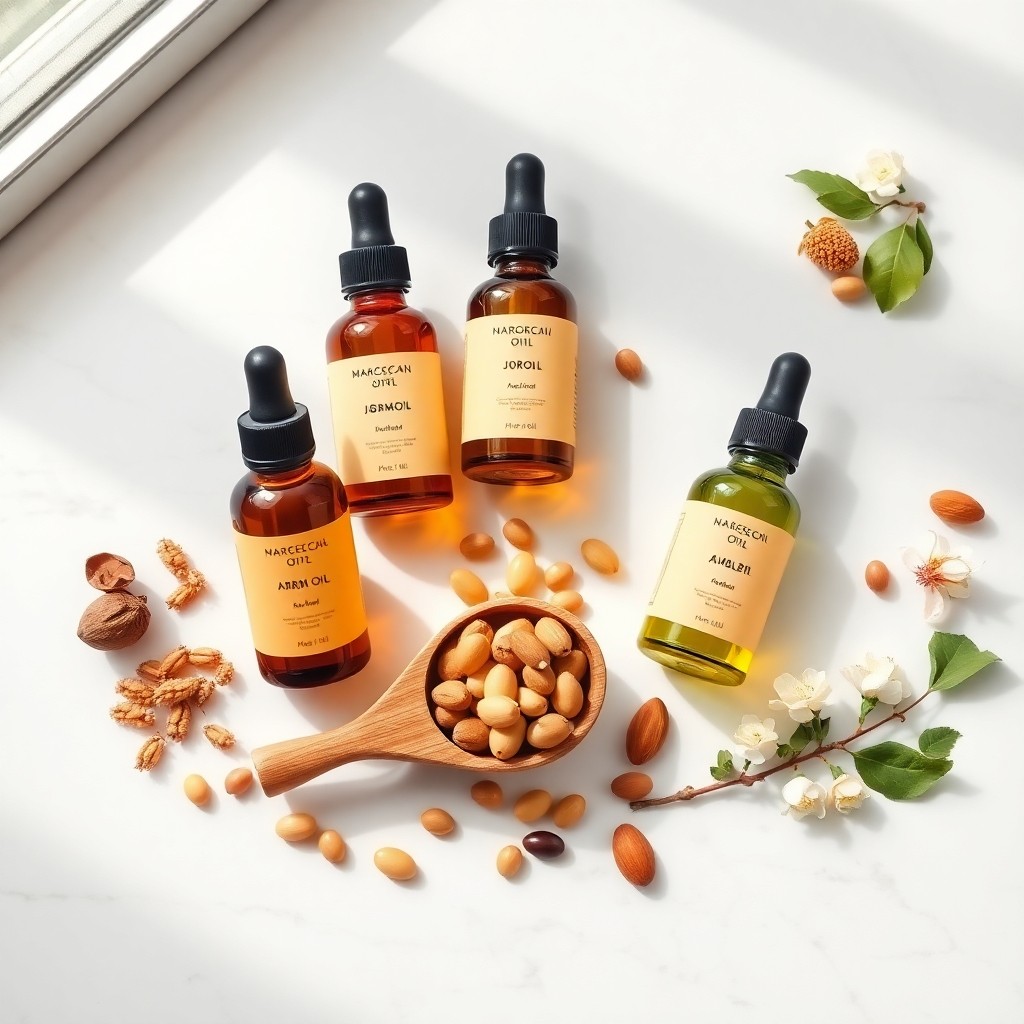
*A professional flat-lay product shot comparing the five most popular carrier oils discussed in the article, each paired with its source botanical ingredient for visual context.*
The real difference between carrier oils lives at the molecular level. Fatty acid composition determines how an oil absorbs, whether it strengthens or disrupts your skin barrier, and which specific concerns it can address. Understanding these profiles transforms you from a passive consumer into an informed buyer.
Moroccan argan oil contains approximately 43–49% oleic acid (omega-9) and 29–36% linoleic acid (omega-6), with smaller amounts of palmitic acid, stearic acid, and alpha-linolenic acid. This near-balanced ratio gives argan oil a unique versatility — it moisturizes deeply without feeling greasy, and its high linoleic acid content makes it suitable even for combination and mildly oily skin types. Argan oil also delivers 200–400 mg/kg of tocopherols (vitamin E), roughly 2–3 times more than olive oil, along with phenolic compounds like caffeic acid and oleuropein that provide antioxidant protection.
Here's how the most popular carrier oils compare in their fatty acid breakdown:
| Carrier Oil | Oleic Acid (Omega-9) | Linoleic Acid (Omega-6) | Key Distinction | |---|---|---|---| | **Argan Oil** | 43–49% | 29–36% | Balanced ratio; high vitamin E | | **Jojoba Oil** | 5–15% | ~5% | Technically a liquid wax ester; closest to human sebum | | **Coconut Oil** | 5–8% | 1–3% | 45–53% lauric acid; highly occlusive | | **Rosehip Oil** | 10–18% | 41–51% | Highest linoleic acid; rich in trans-retinoic acid | | **Grapeseed Oil** | 15–20% | 66–74% | Extremely high linoleic; very lightweight |
Why do these ratios matter? Linoleic acid is a critical component of ceramides — the lipids that hold your skin barrier together. Oils high in linoleic acid (rosehip, grapeseed) absorb quickly and help repair a compromised barrier, making them ideal for acne-prone, oily, or inflamed skin. Oils high in oleic acid (argan, avocado, olive) are richer and more occlusive, creating a protective film that locks in moisture — better suited for dry, mature, or dehydrated skin.
For aging or sun-damaged skin, rosehip oil's exceptionally high linoleic acid content (up to 51%) combined with natural trans-retinoic acid gives it a regenerative edge that argan oil can't match. For deep hydration on severely dry skin, coconut oil's lauric acid content provides unmatched occlusive power — though its comedogenic rating of 4 out of 5 makes it a poor facial choice for most people.
Skin Type Matchmaker: Which Carrier Oil Belongs to You?
Choosing the right carrier oil isn't about finding the "best" one in absolute terms — it's about matching the oil's properties to your skin's specific behavior. Here's a detailed breakdown of how each major carrier oil performs across different skin types.
**Oily and Acne-Prone Skin:** Grapeseed oil is your strongest starting point. Its 66–74% linoleic acid content helps regulate sebum composition, and its lightweight texture absorbs within minutes without leaving a residue. Jojoba oil is the second-best option because its wax ester structure signals to your skin that enough oil has been produced, potentially reducing overproduction. Argan oil works for combination skin that's oily in the T-zone but dry on the cheeks, but pure argan may feel too rich for consistently oily skin. Avoid coconut oil entirely on your face — its comedogenic rating of 4 out of 5 means it clogs pores for the majority of users.
**Dry and Dehydrated Skin:** Argan oil shines here. Its balanced oleic-linoleic ratio delivers both immediate emollient comfort and longer-term barrier support. Apply 3–4 drops to damp skin after cleansing to lock in hydration. Coconut oil works as an overnight body treatment for extremely dry areas like elbows and heels, but its heavy texture makes it impractical for facial use on most people.
**Sensitive and Rosacea-Prone Skin:** Rosehip oil and argan oil are the top contenders. Rosehip's high linoleic acid content helps calm inflammation, while argan oil's antioxidant compounds (particularly ferulic acid and tocopherols) protect against environmental triggers. Always patch-test behind your ear for 48 hours before applying any new carrier oil to your full face.
**Mature and Aging Skin:** This is where the argan oil vs jojoba oil debate gets nuanced. Argan oil delivers vitamin E and polyphenols that fight free radical damage, while rosehip oil provides natural retinoid-like compounds that support cell turnover. For maximum anti-aging benefit, many estheticians recommend layering: rosehip oil first (for regeneration), followed by a thin layer of argan oil (for protection and moisture sealing).
**Find Your Skin Type in 3 Minutes:** Wash your face with a gentle cleanser, pat dry, and wait 30 minutes without applying any products. If your skin feels tight and flaky everywhere, you have dry skin. If you see shine across your entire face, you have oily skin. If only your forehead, nose, and chin are shiny, you have combination skin. If you notice redness, stinging, or reactivity, you likely have sensitive skin. Match your result to the recommendations above.
*A split-composition beauty portrait demonstrating how Moroccan argan oil suits dry/mature skin while jojoba oil is ideal for oily/combination skin, visually reinforcing the article's skin-type compatibility analysis.*
Beyond Skin: Hair, Nails, and Therapeutic Use Cases

Carrier oils extend far beyond facial skincare, and this is where Moroccan argan oil for hair repair has earned its legendary reputation. Argan oil's medium molecular weight allows it to penetrate the hair shaft without weighing hair down, while its vitamin E content smooths the cuticle layer to reduce frizz and add shine. Apply 2–3 drops to damp hair before heat styling for thermal protection up to 450°F (232°C), or work a few drops through dry ends as a finishing serum. For deeper conditioning, argan oil can be used as a 30-minute pre-shampoo mask — warm 1 tablespoon between your palms and work from mid-lengths to ends.
Coconut oil outperforms argan oil for deep hair penetration due to its low molecular weight and straight-chain lauric acid structure, which actually enters the hair cortex. A 2003 study published in the Journal of Cosmetic Science found that coconut oil reduced protein loss in both undamaged and damaged hair when used as a pre-wash treatment. However, coconut oil's heaviness makes it unsuitable for fine or low-porosity hair, where it can create a greasy buildup.
For scalp health, grapeseed oil offers a lightweight alternative that won't clog hair follicles. Its astringent properties make it useful for balancing oily scalps, and it serves as an excellent carrier for tea tree or rosemary essential oils in DIY scalp treatments.
Beyond hair, carrier oils serve several therapeutic purposes:
- **Scar healing and stretch marks:** Rosehip oil has the strongest clinical backing here, with studies showing improvement in post-surgical scar appearance after 12 weeks of twice-daily application. Argan oil supports skin elasticity during pregnancy when massaged into the abdomen, hips, and breasts. - **Nail and cuticle care:** Jojoba oil's small molecular structure allows it to penetrate the nail plate more effectively than thicker oils. Apply a drop to each cuticle daily for measurable improvement within two weeks. - **Massage and aromatherapy base:** Grapeseed oil's light texture and neutral scent make it the preferred massage base for professional aromatherapists. Argan oil works for shorter massage sessions where deeper nourishment is desired. - **Cost-per-use consideration:** A 4 oz bottle of grapeseed oil ($8–12) lasts significantly longer for body applications than the same volume of argan oil ($18–35), simply because argan oil's richness means you need fewer drops per application on the face, but its price makes full-body use expensive.
Sourcing, Purity, and Sustainability: The Hidden Differences
The quality of a carrier oil depends entirely on how it was extracted, processed, and stored. Understanding these factors protects you from wasting money on adulterated products that deliver little to no benefit.
"Cold-pressed, unrefined" means the oil was extracted mechanically at temperatures below 120°F (49°C) without chemical solvents or high-heat processing. This preserves heat-sensitive compounds like vitamin E, polyphenols, and essential fatty acids. For argan oil specifically, mechanical extraction is critical because the oil comes from kernels inside a hard nut that must be cracked by hand — a labor-intensive process that takes approximately 30 kg of argan fruit to produce 1 liter of oil. Refined argan oil, by contrast, has been deodorized, bleached, and stripped of its characteristic nutty scent along with many of its beneficial compounds.
**Sustainability profiles vary dramatically across carrier oils:**
- **Argan oil** is produced exclusively in southwestern Morocco, where women's cooperatives harvest fruit from argan forests designated as a UNESCO Biosphere Reserve. These cooperatives provide fair wages and employment to thousands of rural women. However, argan trees grow slowly (taking 5–8 years to bear fruit), and increasing global demand puts pressure on these fragile ecosystems. Look for Fair Trade or ECOCERT certifications. - **Coconut oil** production raises concerns about monoculture plantations replacing tropical biodiversity in Southeast Asia and the Pacific Islands. Some producers exploit labor in countries like the Philippines and Indonesia. Virgin coconut oil from small-scale, organic farms is the more ethical choice. - **Jojoba oil** comes from a drought-resistant desert shrub native to the Sonoran Desert. It requires minimal water and thrives in arid conditions, making it one of the most environmentally sustainable carrier oils available. - **Grapeseed oil** is typically a byproduct of the wine industry, which gives it a sustainability advantage — the raw material would otherwise go to waste, making it an efficient use of existing agricultural output.
**5-Point Purity Checklist:**
1. **Color:** Pure argan oil should be golden to golden-brown. Pale yellow or clear argan oil has likely been refined or diluted. 2. **Scent:** Authentic argan oil has a mild, nutty, earthy aroma. A strong rancid smell indicates oxidation; no scent at all suggests refinement. 3. **Labeling:** The ingredient list should read only "Argania Spinosa Kernel Oil" (or the equivalent INCI name for other oils). Avoid products listing mineral oil, silicones, or fragrance. 4. **Certifications:** Look for USDA Organic, ECOCERT, Fair Trade, or USDA seals that verify production standards. 5. **Packaging:** Carrier oils degrade in light and air. Quality oils come in dark amber or cobalt blue glass bottles with a dropper or narrow spout. Clear glass or plastic packaging is a red flag.
**Red flags for adulterated oils:** prices significantly below market average (pure argan oil costs $15–40 for 4 oz), watery consistency, lack of any scent in argan oil, and labels that say "argan oil blend" without specifying the percentage of argan content. Some manufacturers cut argan oil with cheaper oils like sunflower or soybean oil, diluting both the efficacy and the ethical sourcing story.
The Verdict: Decision Framework for Every Budget and Goal
After examining the evidence across every practical dimension, here's the honest assessment: Moroccan argan oil is the most versatile single carrier oil available, but it isn't the best choice in every category. The "best" oil depends entirely on what you prioritize.
**Prioritize absorption and lightweight feel → Grapeseed oil.** At $8–12 for 4 oz, it's the most affordable option and absorbs faster than any other oil on this list. Ideal for oily skin, scalp treatments, and massage.
**Prioritize healing and regeneration → Rosehip oil.** Its unmatched linoleic acid content and natural retinoid compounds make it the strongest choice for scar treatment, anti-aging, and sun damage repair. Budget $12–25 for 2 oz.
**Prioritize budget and daily use → Jojoba oil.** At $8–15 for 4 oz, jojoba offers excellent value and works across nearly all skin types. Its stability also gives it a shelf life of 5+ years, reducing waste.
**Prioritize all-around performance → Argan oil.** If you can only buy one oil and want it to handle face, body, hair, and nails, argan oil delivers the broadest range of benefits. Its combination of vitamin E, balanced fatty acids, and antioxidant compounds covers moisturizing, anti-aging, and protective needs simultaneously.
**Starter Kit Recommendation:** For beginners building a carrier oil collection, start with two bottles: jojoba oil (for daily facial use and oily/combination skin days) and argan oil (for dry days, hair treatments, and body moisturizing). Add rosehip oil as a third option once you're ready to target specific concerns like fine lines or post-acne marks.
The key takeaway from this Moroccan argan Oil vs. Other Carrier Oils: Which is Best? analysis is that context determines quality. A $30 bottle of pure, cold-pressed, cooperatively sourced argan oil is an exceptional investment for someone with dry or mature skin. That same bottle would be a poor choice for someone with acne-prone skin who'd benefit more from a $10 bottle of grapeseed oil. Match the oil to the need, verify the quality, and you'll get results regardless of which bottle you reach for.
Conclusion: Your Carrier Oil Cheat Sheet
Here's your quick-reference summary: jojoba mimics sebum and regulates oil production, rosehip repairs and regenerates damaged skin, argan serves as the all-rounder for face and body, and grapeseed delivers lightweight moisture without clogging pores. No single carrier oil wins every category — the best one is the one that matches your skin type, your goals, and your budget.
Now it's your turn. Drop a comment below with your skin type and the carrier oil you're currently using, and I'll give you a personalized recommendation for what to try next. If you found this comparison helpful, stay tuned for the upcoming guide: "The Ultimate Carrier Oil Pairing Chart for DIY Blends," which will show you exactly how to combine these oils for custom serums, hair treatments, and body oils tailored to your needs.
Frequently Asked Questions (FAQ)
**1. Is Moroccan argan oil better than jojoba oil for acne?**
For active acne, jojoba oil is generally the better choice because its wax ester structure closely mimics human sebum and can help regulate oil production. Argan oil works better for post-acne marks and combination skin, as its balanced fatty acid profile supports barrier repair without being overly heavy.
**2. Can I use argan oil for hair and body, or should I buy separate oils?**
You can absolutely use one bottle of pure argan oil for face, hair, and body. It's versatile enough across all three applications. However, for cost efficiency on large body areas, consider using a more affordable oil like grapeseed or sweet almond for body moisturizing while reserving argan oil for your face and hair ends.
**3. What's the difference between cold-pressed and refined carrier oils?**
Cold-pressed oils are extracted mechanically below 120°F without chemical solvents, preserving vitamins, antioxidants, and fatty acids. Refined oils undergo high-heat processing, deodorization, and bleaching, which strips beneficial compounds and may leave chemical residues. Cold-pressed oils deliver significantly more skincare benefits.
**4. How can I tell if my argan oil is pure or fake?**
Pure argan oil has a golden color, a mild nutty scent, and absorbs within 2–3 minutes without heavy greasiness. If your oil is clear, odorless, watery, or priced under $10 for 4 oz, it's likely diluted or refined. Check the label — it should list only "Argania Spinosa Kernel Oil" as the ingredient.
**5. Which carrier oil is best for sensitive or rosacea-prone skin?**
Rosehip oil and argan oil are the top recommendations for sensitive and rosacea-prone skin. Rosehip's high linoleic acid content calms inflammation, while argan oil's antioxidant compounds protect against environmental triggers. Always patch-test behind your ear for 48 hours before full facial application.
**Meta Description:** Comparing Moroccan argan oil vs jojoba, rosehip, grapeseed, and coconut oil. Discover which carrier oil matches your skin type, budget, and goals with a detailed breakdown.