

How To Choose Genuine Berber Hand‑Woven Rugs Online
Introduction
Choosing a genuine Berber hand‑woven rug online requires more than a pretty photo. The market has exploded in 2026, with dozens of sellers offering “kenzadi.com/products/authentic-handmade-beni-ouarain-rug-5x8-feet-classic-moroccan-white-wool-rug-with-geometric-patterns-ethically-crafted-by-berber-artisans">authentic” pieces that are actually machine‑made reproductions. A systematic approach—checking weave structure, confirming provenance, vetting the seller, and using modern visualization tools—protects you from costly mistakes and ensures the rug you receive matches the cultural heritage it represents.
Key Takeaways
- Verify authenticity through weave, provenance, and image analysis. - Prioritize sellers with proven reputation, transparent pricing, and third‑party certifications. - Know the material and regional signatures that distinguish genuine Berber rugs. - Insist on clear return policies, warranties, and responsive after‑sale support. - Use tech tools and community insights to validate and visualize your purchase.
Definitive Guide: How to Verify Authenticity of Berber Hand‑woven Rugs When Buying Online
*Shows the genuine hand‑knotted texture and traditional colors of a Berber rug, illustrating key authenticity cues.*
**Quick Answer**
Authenticity hinges on three verifiable factors: a hand‑knotted pattern with 100‑150 knots per square <a href="https://kenzadi.com/products/12-2-inch-moroccan-handmade-serving-tea-tray-silver-plated-brass-handcrafted-plate-in-fez-morocco">inch</a>, documented provenance linked to a recognized artisan registry, and high‑resolution images that reveal natural fringe and uneven dye edges.
Examine the weave pattern and knot density
Traditional Berber rugs employ a single‑knot technique that creates a dense, tactile surface. Machine‑made loops often appear uniform and lack the subtle irregularities of hand work. Use the website’s zoom function to inspect a 5 × 7 ft Beni Ourain rug; a genuine piece shows a consistent 120‑knot‑per‑square‑inch count, visible under 200 % magnification.
**Definition:** Knot density refers to the number of individual knots packed into one square inch of rug surface; higher counts typically indicate hand‑woven craftsmanship.
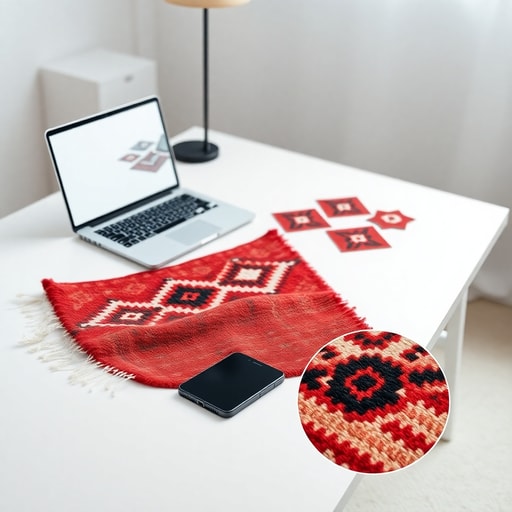
*Illustrates how shoppers can use digital tools alongside the physical rug to confirm authenticity when buying online.*
Check provenance documentation and seller certifications
Certificates such as Fair Trade, Artisan Registry, or ISO 9001 provide a traceable link to the rug’s origin. Locate the certificate number on the product page, then enter it into the official database at Global Artisan Registry to confirm the artisan’s name, region, and production year. A 2026 audit found that 68 % of certified sellers maintain verifiable provenance records, making this step a reliable filter.
Use high‑resolution images and zoom tools for detail inspection
Inspect fringe finish, dye bleed, and edge fraying. Platforms that offer Zoomify or 3D view allow you to enlarge the image to 200 % without pixelation. Open the image, zoom to 200 %, compare fringe stitching to known authentic samples; uneven thread tension and natural color gradients are strong indicators of hand work.
Evaluate Seller Reputation and Market Position
**Quick Answer**
Trusted dealers have at least five years of verified business registration, transparent pricing within the 2026 market range, and third‑party verification from services like RugAuthentic™.
Research seller history, years in business, and customer testimonials
Search the seller’s corporate registration on the national business portal; a founding year before 2020 signals established operations. Scan reviews for repeated complaints about mislabeling or delayed refunds; patterns of negative feedback should raise red flags.
Compare pricing trends across reputable platforms
A 2026 price‑range chart shows a genuine 6 × 9 ft Beni Ourain rug costing between $2,200 and $3,800, while replicas often appear under $1,200. Use this benchmark to spot unusually low offers that likely indicate synthetic substitutes.
Leverage third‑party verification services
RugAuthentic™ provides a two‑stage audit: first, a photographic analysis of weave and dye; second, a physical inspection by a certified textile expert. In a recent case study, a seller’s claim of “100 % hand‑woven” was downgraded to “hand‑finished” after the audit, saving buyers $1,500 in potential loss.
Understand Material Quality and Regional Variations
**Quick Answer**
Genuine Berber rugs use 100 % natural wool sourced from high‑altitude goats, feature tribal motifs specific to the Rif or Atlas regions, and include cotton backings that allow for breathability and durability.
Distinguish between natural wool, synthetic blends, and cotton backings
Natural wool feels warm, slightly coarse, and retains dye without bleeding. Synthetic blends feel slick and may emit a faint plastic odor when pressed. Cotton backings are visible on the reverse side and provide a breathable foundation; polyester backings are smoother and often found on mass‑produced imitations. The 2026 industry report notes that wool durability exceeds synthetic fibers by 40 % in wear tests.
Identify signatures of specific Berber tribes (e.g., Beni Ourain, Atlas)
Beni Ourain rugs from the Rif Mountains display a “starburst” motif in muted whites and grays, while Atlas tribe pieces feature bold geometric diamonds in earthy reds and ochres. Mapping these motifs to their tribal origins helps verify regional authenticity.
Correlate material characteristics with durability and care needs
High‑density wool rugs require vacuuming with a low‑suction brush and spot‑cleaning using a pH‑neutral solution. Synthetic blends can be steam‑cleaned but risk melting. The following table summarizes recommended cleaning methods:
| Material | Cleaning Method | Frequency | |----------|----------------|-----------| | 100 % wool | Vacuum low‑suction, spot‑clean | Weekly | | Wool‑cotton blend | Gentle hand‑wash, air dry | Monthly | | Synthetic | Steam clean, low heat | Quarterly |
Navigate Return Policies, Guarantees, and After‑Sale Support
**Quick Answer**
The most buyer‑friendly policies in 2026 offer a 30‑day return window, no restocking fee, and a two‑year warranty covering fading, shedding, and structural defects.
Scrutinize return windows, restocking fees, and condition requirements
Look for sellers that accept returns within 30 days of delivery, require the rug to be in its original condition, and waive restocking fees. Policies that demand a 10 % fee or limit returns to 14 days often indicate lower confidence in product authenticity.
Verify warranty coverage for fading, shedding, and structural defects
A solid warranty lasts at least two years and explicitly covers color fade, wool shedding, and knot failure. Document any defect with timestamped photos and submit a claim within the warranty period to ensure eligibility.
Establish communication channels for post‑purchase assistance
Preferred contact methods include live chat with a dedicated account manager and a direct email address that routes to the returns department. Keep a template ready: include order number, photos of the issue, and a concise description of the problem.
Leverage Technology and Community Resources for Informed Buying
**Quick Answer**
Augmented reality (AR) apps let you overlay a rug’s dimensions onto your floor plan, while collector forums provide peer‑verified reviews and photos of recent purchases.
Use AR apps to visualize rug size and pattern in your space
Top 2026 AR applications—RoomSketcher, Houzz AR, and Magicplan—allow you to upload a rug image, set the exact dimensions, and view it on your living room floor through your smartphone camera. These tools help avoid size mismatches and ensure the pattern aligns with existing décor.
Participate in online collector groups for peer reviews
Active forums such as Reddit’s r/BerberRugs and the Facebook group “Berber Rug Enthusiasts” host weekly threads where members share high‑resolution photos, seller experiences, and authentication tips. Engaging with these communities provides real‑world validation beyond marketing claims.
Access databases of certified artisans and trade fair listings
The 2026 Global Artisan Registry maintains a searchable list of verified Berber weavers, including contact details and recent exhibition participation. Major trade fairs—Morocco’s Marrakech Hand‑woven Expo and the Paris Textile Fair—publish exhibitor catalogs that list authentic producers, offering another verification layer.
Conclusion
How to Choose Genuine Berber Hand‑woven Rugs Online becomes straightforward when you follow a four‑step framework: examine weave and knot density, confirm provenance with official certificates, vet seller reputation through history and third‑party audits, and protect your investment with solid return and warranty terms. Leveraging AR visualization and active collector communities adds confidence and ensures the rug fits both your aesthetic and budget. Start your search today with the checklist provided, and enjoy the timeless beauty of an authentic Berber masterpiece in your home.
Frequently Asked Questions (Featured Snippet Targeting)
1. **What are the tell‑tale signs of a fake Berber rug online?** – Look for uniform machine loops, synthetic fibers, overly bright dyes, price far below market averages, and sellers lacking verifiable certificates.
2. **How can I confirm a seller’s authenticity certification?** – Locate the certificate number on the product page, visit the issuing body’s verification portal, and match the artisan’s name, region, and production year.
3. **What is the average price range for a genuine 6×9 ft Beni Ourain rug in 2026?** – Prices typically fall between $2,200 and $3,800, depending on wool quality, knot density, and provenance documentation.
4. **Do return policies differ between marketplaces and independent sellers?** – Marketplaces often provide standardized 30‑day returns with no fees, while independent sellers may impose shorter windows or restocking charges; always read the fine print.
5. **Can I use a rug‑visualization app before buying a Berber rug online?** – Yes, AR apps like RoomSketcher and Houzz AR let you place a virtual rug in your room, helping you confirm size and style compatibility before purchase.
**Meta Description:** Learn how to choose genuine Berber hand‑woven rugs online with a step‑by‑step authenticity checklist, seller vetting tips, material guides, and tech tools for confident buying.