
Berber Crafts: Preserving Morocco'S Ancient Traditions
Berber Crafts: Preserving Morocco's Ancient Traditions
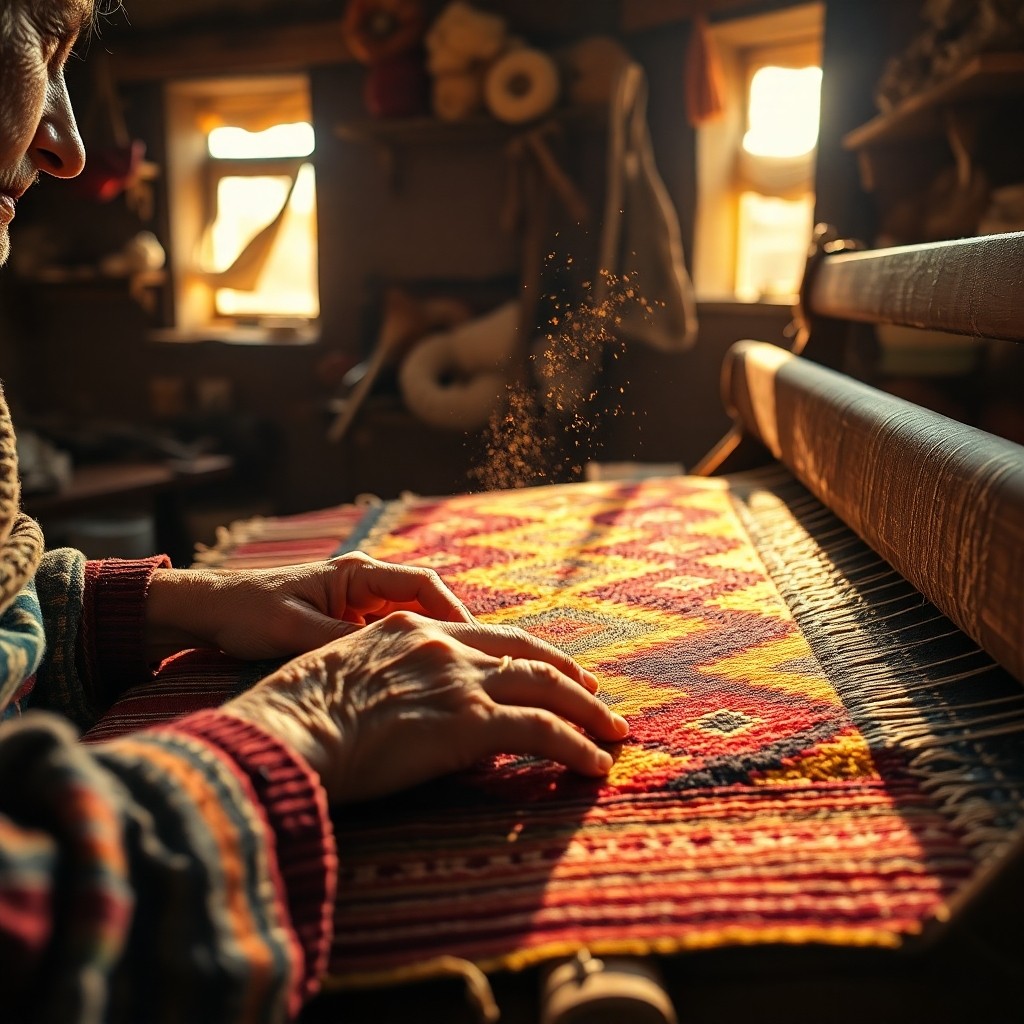
In the shadow of the High Atlas Mountains, a woman sits at a wooden loom, her hands moving through wool with a rhythm learned from her grandmother and her grandmother's grandmother before that. The rug growing beneath her fingers carries diamond-shaped motifs that speak of fertility, protection, and belonging — a visual language older than written Arabic in North Africa. Yet outside her workshop, the forces of globalization press in with relentless urgency. Mass-produced imitations flood Moroccan souks. Young people migrate to Casablanca and Rabat for factory jobs. Synthetic dyes undercut the market for naturally colored wool. The tension between cultural preservation and economic survival defines daily life for Morocco's Berber artisan communities — and the outcome remains far from certain.
The Berber people, who call themselves Amazigh (meaning "free people"), have inhabited North Africa for at least 5,000 years, long before Arab influence arrived in the seventh century. Their craft traditions — spanning textiles, pottery, metalwork, basketry, and leather — represent far more than decorative skill. They encode ecological knowledge about local plants and minerals, preserve mathematical and geometric understanding, and serve as markers of tribal identity across dozens of distinct Amazigh groups. Safeguarding these indigenous knowledge systems is an urgent project, one that carries lessons about sustainability, community, and identity that the modern world desperately needs.
The specific craft traditions at stake, the socio-economic pressures threatening them, and the remarkable preservation movements — from grassroots cooperatives to constitutional reform — all converge in a defining question for Morocco's rural communities.
1. The Symbolic Language of Berber Weaving and Textile Arts
1.1 Decoding the Motifs: What Berber Patterns Actually Communicate
Every zigzag, diamond, and cross on a Moroccan Berber rug carries intentional meaning. These are not abstract decorations chosen for aesthetic appeal alone. The geometric vocabulary of Amazigh textiles functions as a form of non-verbal communication, encoding fertility prayers, protective charms against the evil eye, tribal affiliations, and spiritual beliefs into wool and cotton.
The variations between regions are striking and deliberate. Middle Atlas rugs from the Zemmour tribe tend toward bold geometric abstraction with deep reds and oranges. High Atlas weavings from the Aït Ouaouzguite confederation feature finer, more intricate patterns with symbolic references to the surrounding landscape — mountain peaks rendered as stacked triangles, rivers as wavy lines. Anti-Atlas textiles from the Aït Khabbash group incorporate protective symbols drawn from pre-Islamic animist traditions alongside later Islamic influences. In Azilal rugs specifically, the fibula symbol — a triangular brooch shape — appears frequently, representing protection and feminine power, a direct reference to the silver brooches traditionally worn by Berber women to fasten their garments.
Understanding these regional differences requires more than a visual guide. It demands knowledge of the specific tribal history, local mythology, and even individual family stories that inform each weaver's choices. A single rug can narrate a woman's life — her marriage, the birth of children, her connection to the land — in a symbolic language that outsiders often reduce to "tribal pattern" without grasping its depth.
1.2 The Process: From Sheep to Finished Rug
The creation of an authentic Moroccan Berber rug begins long before the loom. Wool is sourced from local sheep breeds — typically the Timahdite or Beni Guil varieties native to the Atlas Mountains — and washed in river water before being hand-spun using a drop spindle. This spinning process alone can take several days for a single rug's worth of yarn.
Natural dyeing follows, using materials gathered from the surrounding environment. Saffron and pomegranate rind produce warm yellows and golds. Indigo creates the deep blues found in Middle Atlas pieces. Henna and madder root yield reds and rust tones. The specific shade achieved depends on water mineral content, mordant type, and dyeing duration — variables that give each hand-dyed batch subtle uniqueness.
Weaving itself occurs on a vertical loom, traditionally set up outdoors or in a home's communal space. The weaver works without printed patterns, relying on memorized designs passed down through generations. For a flat-woven Hanbel rug from the Khenifra region measuring 1.8 by 2.7 meters, a single weaver typically requires four to eight weeks of dedicated work depending on the complexity of the pattern and the fineness of the weave. A thicker, knotted piece can take three to six months.
1.3 The Role of Women as Knowledge Keepers
In Berber society, textile arts are overwhelmingly women's domain. Mothers teach daughters to spin, dye, and weave beginning in early childhood, and the knowledge transfer happens organically through daily practice rather than formal instruction. This matrilineal transmission means that weaving patterns carry family signatures — experienced collectors can sometimes identify which douar (village) or even which family produced a specific piece based on subtle stylistic choices.
Beyond cultural preservation, weaving provides rural Berber women with a rare form of economic independence. In communities where formal employment opportunities are scarce, rug and textile sales represent one of the few income streams women control directly. The communal aspect reinforces this: weaving circles, where multiple women gather to work simultaneously, serve as spaces for social bonding, collective problem-solving, and intergenerational mentorship. These gatherings are not merely productive — they are the social infrastructure through which Amazigh textile knowledge survives.
2. Berber Pottery and Ceramics: Earth, Fire, and Ancestral Technique
2.1 Regional Styles and Their Distinctive Signatures
Morocco's pottery traditions vary dramatically by region, shaped by the specific clays, minerals, and fuels available in each area. In Safi, on the Atlantic coast, artisans produce elaborately painted ceramics featuring intricate geometric and floral motifs in blue, white, and black — a tradition influenced by centuries of trade with sub-Saharan Africa and Europe. The clay here is rich in iron oxide, producing a warm terracotta base that painters cover with detailed designs using mineral-based pigments.
Three hundred kilometers to the southeast, the village of Tamegroute in the Draa Valley is famous for its distinctive green-glazed pottery. The glaze, made from local manganese dioxide and silica-rich sand, produces an unpredictable range of olive, emerald, and bottle-green finishes that no factory can replicate. Each piece emerges from the kiln with unique color variations caused by temperature fluctuations in the wood-fired oven.
In the rural Atlas Mountains, Berber tribal pottery takes a more utilitarian form. Hand-built cooking pots, water storage vessels, and bread ovens are shaped without a potter's wheel using coil-building techniques. These pieces are typically unglazed or decorated with simple incised patterns, prioritizing function over ornamentation. The village of Oulad Sidi Ali, nestled in the Middle Atlas foothills, maintains a distinctive tradition of black pottery fired in oxygen-deprived kilns, producing matte-finished vessels used for storing grain and water in mountain households.
2.2 The Cooperative Model: How Pottery Villages Sustain Craft Economies
Many of Morocco's pottery villages operate through artisan cooperatives — collective organizations where potters pool resources for clay extraction, kiln use, and market access. These cooperatives set quality standards, negotiate pricing collectively, and often maintain showrooms where buyers can purchase directly, bypassing the middlemen who typically capture most of the profit in tourist markets.
The cooperative model provides several critical advantages. Shared kiln access reduces individual fuel costs. Collective bargaining power prevents the race-to-the-bottom pricing that individual artisans face when competing against factory-produced goods. Quality control mechanisms help maintain the reputation of a village's output, which in turn supports premium pricing.
However, cooperatives face persistent challenges. Mass-produced ceramics manufactured in Chinese factories and sold through Moroccan imitations flood the market at a fraction of the cost of handcrafted originals. The Cooperative Artisanal de Tamegroute, one of the better-organized pottery collectives, generates approximately 2.5 million dirhams (roughly $250,000 USD) annually — a figure that, while impressive for a village of 3,000 residents, pales in comparison to the revenue of a single mid-sized ceramics factory. Without strong branding and consumer education, even well-organized cooperatives struggle to compete on price alone.
2.3 Threats to Authenticity: Imitation, Industrialization, and Cultural Dilution
The most insidious threat to Berber pottery comes not from declining interest but from counterfeit production. Factory-made ceramics stamped with "Berber-style" designs appear in markets across Morocco and are increasingly exported globally. These pieces mimic the visual vocabulary of traditional pottery while eliminating the human skill, regional specificity, and cultural meaning behind genuine artifacts.
Morocco's intellectual property framework offers limited protection for indigenous design traditions. Unlike individual artists who can copyright specific works, communal craft traditions — patterns used by entire communities for centuries — fall into a legal gray area. No Berber community has successfully trademarked its traditional designs, though advocates have pushed for sui generis protections modeled on systems used for indigenous cultural expressions in New Zealand and India.
The result is a marketplace where consumers often cannot distinguish between a 150-dirham factory-made bowl and a 1,500-dirham handcrafted piece from Tamegroute. This confusion devalues the labor of skilled artisans and erodes the economic foundation that sustains craft communities.
3. Silver, Jewelry, and Adornment: Identity Worn on the Body
3.1 The Amulet Tradition: Jewelry as Spiritual Protection
Berber silver jewelry functions simultaneously as personal adornment, spiritual armor, and social signaling. The *khmisa* — a hand-shaped pendant also known as the Hand of Fatima — appears in virtually every Amazigh jewelry tradition, worn to ward off the evil eye. Fibulae (*tizerzai*), the large triangular brooches used to fasten draped garments, carry protective significance while also indicating the wearer's tribal group through their specific shape and decorative motifs.
Amber beads combined with silver are particularly valued in Tuareg and Berber traditions, believed to carry healing properties and spiritual power. Coral, believed to represent life force, appears in necklaces and headpieces across southern Morocco. The specific combination of materials, the arrangement of elements, and the weight of a piece all communicate information to those who can read it — marital status, wealth, tribal affiliation, and even personal history. Among the Aït Atta confederation of the Anti-Atlas, for example, the number of amber strands in a woman's necklace historically indicated the size of her family's camel herd, transforming personal adornment into a visible record of economic standing.
3.2 The Decline of Authentic Berber Silver
Genuine antique Berber silver pieces have become increasingly scarce. Many were melted down during periods of economic hardship, particularly in the mid-twentieth century when silver prices rose and rural families needed cash. Others were sold to collectors and dealers, dispersing them into private collections across Europe and North America.
Contemporary Berber jewelry has shifted toward cheaper metals — brass, nickel silver, and plated alloys — driven by both the rising cost of silver and the tourist market's preference for affordable souvenirs. While these modern pieces maintain visual continuity with traditional forms, they lack the material authenticity and often the craftsmanship of older work.
The collectors' market creates a paradox. Western demand for "authentic" Berber silver drives up prices for antique pieces, making them unaffordable for the communities that created them. Meanwhile, the same demand incentivizes the production of convincing fakes. A genuine nineteenth-century Berber silver necklace with amber and coral can fetch $2,000–$8,000 at European auction houses, while a modern reproduction of similar appearance sells in Marrakech souks for $30–$80.
3.3 Contemporary Artisans Reviving Jewelry Traditions
A new generation of Amazigh jewelry designers is bridging ancestral aesthetics with contemporary sensibilities. These artisans work in silver and traditional materials but create pieces designed for modern wear — lighter, more minimalist, and suited to urban lifestyles. Their work appears on Instagram and Etsy, reaching global audiences without the intermediation of galleries or dealers.
The brand Amazigh Jewelry, founded by designer Fatima Zahra Ait Hssain in Marrakech, exemplifies this approach. She collaborates directly with rural women's cooperatives in the Ourika Valley, providing design input and market access while ensuring that traditional techniques like hand-filigree and lost-wax casting remain central to production. This model — combining contemporary design sensibility with ancestral craft methods — represents one of the most promising pathways for keeping Berber jewelry traditions economically viable.
4. The Economics of Preservation: Cooperatives, Tourism, and Fair Trade
4.1 How Cooperatives Empower Rural Artisans
Weaving cooperatives across the Atlas Mountains have become the backbone of Berber craft preservation. These organizations — many founded and managed entirely by women — provide raw materials, workspace, quality training, and direct market access. By eliminating the chain of middlemen who traditionally captured 70–80% of final sale prices, cooperatives ensure that artisans receive a fair share of the value their labor creates.
The Coopérative Tighfart, founded in 2009 in the Imi n'Tala village of the High Atlas, illustrates the transformative potential of this model. Starting with 15 members and a single weaving room, the cooperative now employs over 60 women, exports rugs to European and North American markets, and has invested proceeds into a community school and a health clinic. Members earn an average of 3,000 dirhams per month — more than double the income available from agricultural labor alone. The most successful cooperatives develop their own brands, establish relationships with international retailers, and invest in the professional development of their members — including literacy training, financial literacy, and digital skills. These investments transform cooperatives from simple production units into engines of community development.
4.2 Cultural Tourism as a Double-Edged Sword
Morocco's cultural tourism industry generates approximately 77 billion dirhams ($7.7 billion USD) annually, and artisan visits constitute a significant segment of that revenue. Travelers flock to pottery villages in the south, weaving cooperatives in the Atlas, and metalwork workshops in Fes. These visits provide direct income to craft communities and create powerful incentives for tradition preservation.
However, the tourism relationship carries risks. When craft demonstrations become performances staged primarily for camera-worthy moments, the deeper cultural context can be lost. Artisans may simplify or alter their processes to suit tourist expectations, producing "craft experiences" that prioritize entertainment over authenticity. The pressure to sell can also lead to quality compromises — smaller pieces, simpler designs, and faster production methods that undermine the very traditions tourists came to witness.
4.3 Fair Trade Certification and Its Limitations
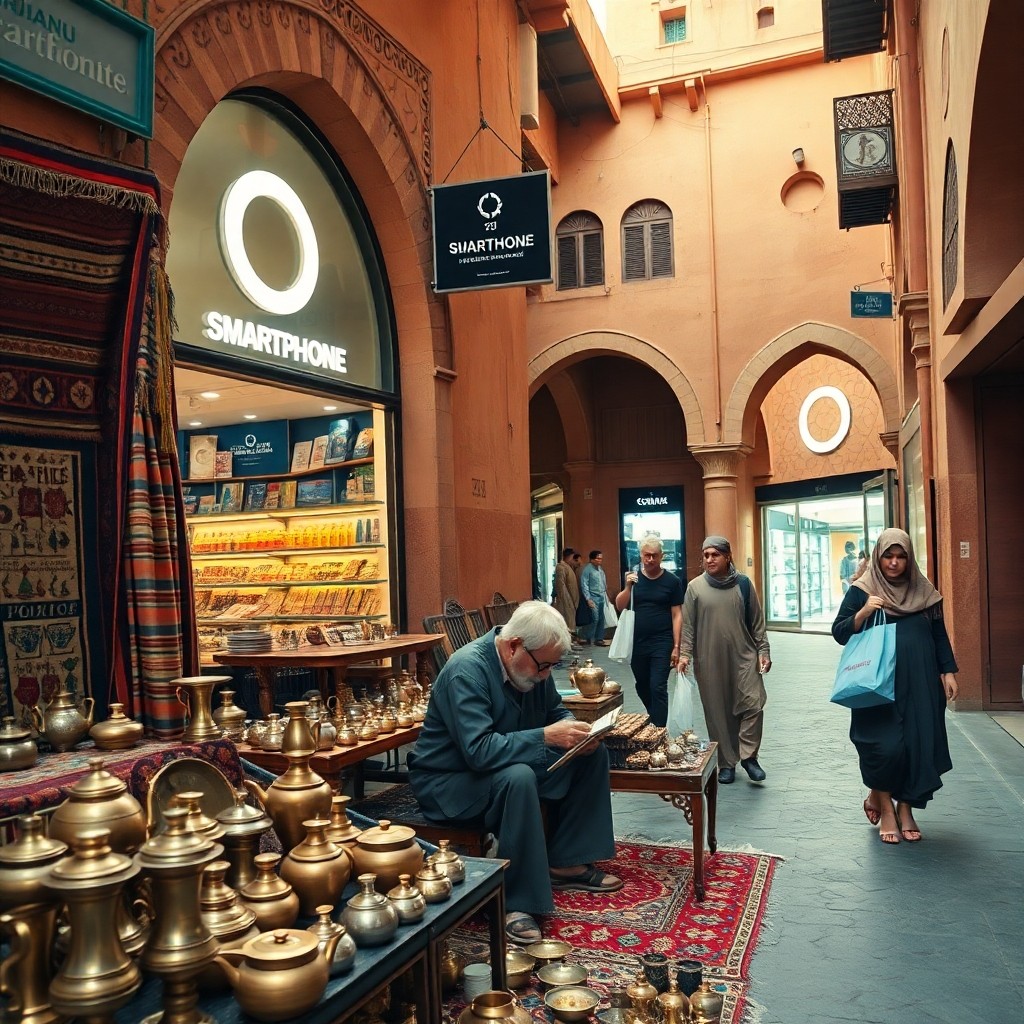
Traditional fair trade certification frameworks, designed primarily for agricultural commodities like coffee and chocolate, fit awkwardly with Berber craft production. The certification process is expensive and bureaucratic, often inaccessible to small cooperatives with limited administrative capacity. Moreover, fair trade standards emphasize individual producer compensation, while Berber craft traditions are inherently communal — knowledge, designs, and techniques belong to the community rather than to individual artisans.
Emerging alternatives offer more promising models. Direct-trade relationships between cooperatives and international retailers eliminate certification costs while maintaining transparency. Blockchain-based provenance tracking allows buyers to verify the origin and production method of individual pieces. Some organizations are developing craft-specific fair trade standards that account for communal knowledge systems and non-industrial production methods.
5. Grassroots Movements and Policy: Who Is Fighting to Save These Traditions?
5.1 The Amazigh Cultural Renaissance and Its Craft Connection
The 2011 Moroccan constitution's recognition of Amazigh as an official language marked a watershed moment for indigenous rights in North Africa. This constitutional recognition — the result of decades of activism — has had tangible effects on craft traditions. Amazigh cultural pride, once suppressed, now fuels renewed interest in traditional arts as expressions of identity rather than markers of rural backwardness.
The Tifinagh script, the ancient Amazigh writing system now taught in Moroccan schools, appears increasingly on craft pieces — woven into rugs, painted into pottery, and engraved into jewelry. This integration of language and craft reinforces both traditions simultaneously, creating a feedback loop of cultural revitalization. The Royal Institute for Amazigh Culture (IRCAM), established in 2001 and granted expanded authority after 2011, has played a pivotal role in funding research, documentation, and public programming that connects linguistic revival to material culture preservation.
5.2 Government and NGO-Led Preservation Efforts
Morocco's Ministry of Crafts (Ministère de l'Artisanat) operates training programs, provides subsidies for raw materials, and organizes national craft exhibitions designed to connect artisans with domestic and international buyers. The Institut des Arts Traditionnels in Fes offers formal training in traditional techniques, ensuring that skills like zellige tilework, wood carving, and textile weaving continue to be taught systematically.
UNESCO has recognized several Moroccan craft traditions as Intangible Cultural Heritage, bringing international attention and funding to preservation efforts. The Argan cooperative model, recognized by UNESCO in 2014, has been replicated across multiple craft sectors, with measurable outcomes including a 40% increase in participating artisan incomes within three years of certification. These designations help justify government investment and create frameworks for documentation and transmission, though critics note that UNESCO recognition alone does not address the economic pressures driving young people away from craft work.
5.3 The Next Generation: Youth Engagement and Innovation
The central challenge facing Berber craft preservation is generational transition. Young Amazigh people, equipped with smartphones and exposed to global culture through social media, often view traditional craft work as economically unrewarding and socially limiting. Rural depopulation accelerates as young men and women migrate to cities for education and employment.
Yet counter-currents exist. Some young artisans are returning to craft work after urban experiences, bringing new skills in design, marketing, and digital communication. Design schools in Rabat and Casablanca now offer programs that integrate traditional Amazigh aesthetics with contemporary product design. Social enterprises combine craft production with technology — using 3D printing for prototyping, e-commerce for distribution, and social media for storytelling. The initiative ArtisanTech Morocco, launched in 2019 in Marrakech, pairs young tech graduates with master artisans to develop digital storefronts, AR-based product storytelling, and data-driven market analysis for craft cooperatives.
The risk of "museumification" — preserving crafts as static artifacts rather than living, evolving practices — remains real. Traditions that cannot adapt to changing materials, markets, and lifestyles may survive in museum collections but disappear from daily life. The most successful preservation efforts treat Berber crafts as dynamic systems capable of evolution without losing their essential character.
6. How to Ethically Collect and Support Berber Crafts Today
6.1 What to Look For (and What to Avoid)
Identifying authentic Berber crafts requires attention to specific details. Handwoven rugs show slight irregularities in their weave — minor variations in line straightness, spacing consistency, and color uniformity that machine production eliminates. Hand-thrown pottery reveals asymmetry, finger marks, and subtle variations in wall thickness. Hand-forged silver jewelry displays tool marks, solder variations, and the slight imperfections that distinguish human craftsmanship from industrial precision.
Ask sellers direct questions: Who made this piece? Which village or cooperative? What materials were used? How long did production take? Vague answers or deflection are red flags. Authentic pieces come with stories — specific weavers, specific places, specific traditions. Mass-produced imitations come with price tags and nothing else. A reliable authenticity checklist for Berber rugs includes: (1) visible hand-knotting on the reverse side, (2) natural dye color variations within a single motif, (3) slightly uneven fringe lengths, (4) presence of at least one deliberate imperfection or "weaver's signature," and (5) a specific geographic origin the seller can name and describe.
6.2 Where to Buy: Cooperatives, Markets, and Online Platforms
The most reliable purchasing channels are artisan cooperatives themselves, government-certified craft centers, and established ethical retailers who maintain direct relationships with producer communities. In Morocco, the Ensemble Artisanal outlets in major cities offer government-verified authentic pieces at fixed prices, eliminating the haggling pressure of tourist markets.
Online, several platforms specialize in ethically sourced Moroccan crafts, providing artisan profiles, production details, and transparent pricing. When shopping in Marrakech's souks or Fes's medinas, approach with informed skepticism — the most aggressive sellers often push the least authentic merchandise.
6.3 Beyond Purchasing: Advocacy and Awareness
Conscious consumption is necessary but insufficient. Supporting Berber craft preservation also means amplifying artisan voices in conversations about cultural heritage, intellectual property, and sustainable development. Share the stories behind the pieces you buy. Support organizations advocating for indigenous design protections. Push for trade policies that value craft labor rather than treating handmade goods as interchangeable with factory alternatives.
Documentary projects, academic research, and responsible travel writing all contribute to the knowledge base that sustains preservation efforts. Every piece of authentic Berber craft carries a story worth telling — and the act of telling it helps ensure the tradition continues.
Conclusion
Berber crafts are not museum pieces awaiting preservation behind glass. They are living systems of knowledge — ecological, mathematical, social, and spiritual — that have sustained Amazigh communities for millennia. When a weaver in the High Atlas creates a rug using patterns her ancestors developed, she is not performing heritage. She is practicing a form of intelligence that connects her to her land, her community, and her history in ways that no digital platform can replicate.
What disappears when these traditions vanish is not merely aesthetic diversity. It is women's economic autonomy in rural communities. It is indigenous ecological knowledge about local plants, minerals, and sustainable production methods. It is a symbolic language that communicates identity, belief, and belonging across generations. The stakes extend far beyond craft markets into fundamental questions about whose knowledge counts and whose cultural expressions deserve protection.
You can participate in this preservation through conscious purchasing, supporting cooperatives and ethical retailers, advocating for indigenous intellectual property protections, and — perhaps most importantly — approaching Berber crafts with the respect and curiosity they deserve. The future of these traditions depends not on freezing them in time but on creating the economic and cultural conditions in which they can continue to evolve, adapt, and thrive.
FAQ Section
Q1: What are the main types of traditional Berber crafts?
Traditional Berber crafts span five primary categories: textiles and rugs (handwoven wool pieces with geometric motifs), pottery and ceramics (regional styles ranging from Safi's painted wares to Tamegroute's green-glazed vessels), silver jewelry (amulets, fibulae, and adornment pieces), basketry (palm fiber and reed weaving for utilitarian and decorative purposes), and leatherwork (bags, poufs, and footwear using vegetable-tanned hides). Each category carries distinct regional variations and symbolic traditions.
Q2: What do the symbols in Berber rugs mean?
Berber rug motifs carry intentional symbolic meaning rather than serving purely decorative purposes. Diamond shapes often represent fertility or the evil eye's protection. Zigzag patterns can signify rivers, snakes, or the journey of life. Cross motifs may indicate cardinal directions or spiritual protection. The fibula (brooch) symbol, common in Azilal rugs, represents protection and feminine power. Meanings vary by region and tribal group, and experienced weavers can read specific family and community histories within complex pattern combinations.
Q3: Where can I buy authentic Berber crafts in Morocco?
Authentic Berber crafts are best purchased directly from artisan cooperatives, government-certified Ensemble Artisanal shops in major cities, and established ethical retailers who maintain transparent supply chains. Online platforms specializing in fair-trade Moroccan crafts offer verified pieces with artisan attribution. Exercise caution in tourist bazaars in Marrakech and Fes, where mass-produced imitations are common and sellers may misrepresent factory-made goods as handcrafted originals.
Q4: Why are Berber crafts important to preserve?
Berber crafts encode indigenous knowledge systems spanning ecology, mathematics, social organization, and spiritual belief. They provide economic independence for rural women in communities with limited formal employment. They preserve Amazigh cultural identity and linguistic heritage through visual symbolism. They represent sustainable production methods using local materials and natural processes. Their loss would mean the disappearance of irreplaceable human knowledge and the economic marginalization of the communities that hold it.
Q5: How has the Amazigh rights movement impacted Berber crafts?
The 2011 Moroccan constitutional recognition of Amazigh as an official language catalyzed a cultural renaissance that directly benefits craft traditions. Amazigh cultural pride has shifted perceptions of traditional crafts from markers of rural backwardness to expressions of indigenous identity. Tifinagh script now appears on craft pieces, reinforcing both linguistic and artistic traditions. Government funding for Amazigh cultural programs has increased, and craft cooperatives benefit from renewed institutional support and international attention.
Q6: Are Berber crafts at risk of disappearing?
Berber crafts face significant threats including industrial competition from mass-produced imitations, rural depopulation as young people migrate to cities, rising material costs, and the erosion of natural dye knowledge. However, active preservation efforts — including women's cooperatives, government training programs, UNESCO heritage designations, fair-trade market development, and youth-led social enterprises — are creating viable pathways for tradition continuation. The outcome depends on sustained economic support, intellectual property protections, and consumer demand for authentic handcrafted pieces.
**Meta Description:** Discover how Berber crafts preserve Morocco's ancient traditions through weaving, pottery, and silver jewelry. Learn about threats to these traditions and how to support artisans ethically.