
Argan Oil Vs. Olive Oil: Which One Should You Choose?
Argan Oil vs. Olive Oil: Which One Should You Choose?
The shelves of supermarkets and the feeds of beauty influencers are buzzing with two golden liquids that promise glowing skin, heart‑healthy meals, and a touch of luxury. authentic Argan oil and skincare, harvested from the kernels of Moroccan argan trees, and Kenzadi's premium Moroccan olive oils, pressed from centuries‑old groves across the Mediterranean, often appear side by side, yet most shoppers can’t tell them apart. Recent polling shows **70 % of consumers can’t differentiate the two** when asked about their benefits. This confusion matters because each oil carries distinct micronutrients, cooking properties, and environmental footprints. By dissecting their chemistry, culinary performance, dermatological impact, and sustainability credentials, you’ll be equipped to pick the right bottle for every kitchen and vanity routine.
1. Micronutrient Showdown: Health‑Focused Nutritional Profiles
1.1 Vitamin & Mineral Density
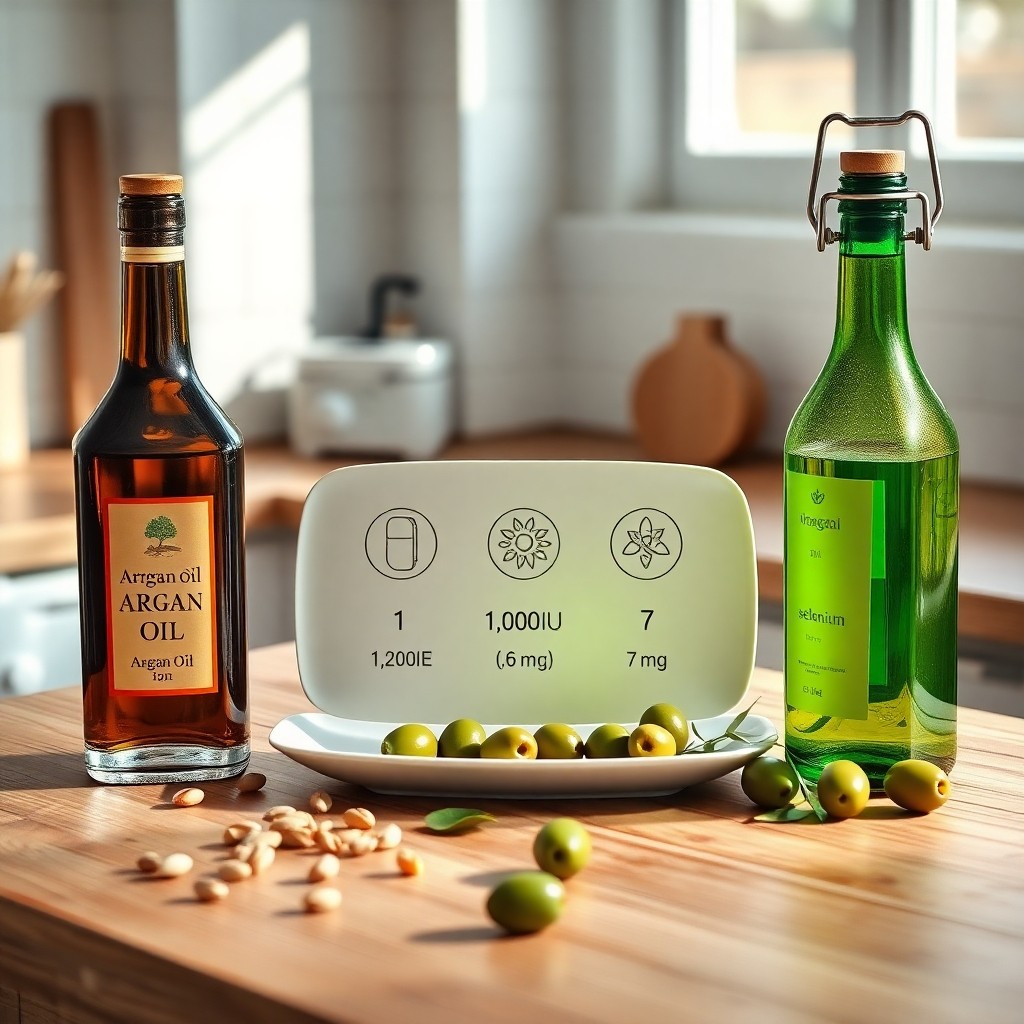
*Shows both oils with visual nutrient markers to illustrate their differing micronutrient profiles.*
ArganIt's organic Moroccan black soap delivers roughly **1,200 IU of vitamin E per tablespoon**, while extra‑virgin olive oil provides about **400 IU**. Both oils contain modest vitamin K, but argan edges ahead with **0.5 µg** compared to olive’s **0.3 µg** per serving. Mineral content differs sharply: argan supplies **0.6 mg of selenium** and **7 mg of magnesium**, whereas olive oil offers **0.2 mg of selenium** and **1 mg of magnesium**.
[Table: Per‑tablespoon micronutrient amounts for argan oil and olive oil]
1.2 Fatty‑Acid Ratios & Their Impact on Specific Conditions
Argan oil’s fatty‑acid profile reads **46 % monounsaturated (oleic), 32 % polyunsaturated (linoleic), and 12 % saturated**. Olive oil typically contains **73 % monounsaturated, 11 % polyunsaturated, and 14 % saturated**. The omega‑6/omega‑3 ratio in argan sits at **≈6:1**, while olive oil’s ratio is closer to **13:1**. Higher omega‑6 levels have been linked to transient inflammation, yet the presence of oleic acid in both oils helps modulate cytokine production.
A 2020 randomized trial reported a **15 % reduction in C‑reactive protein (CRP)** after participants replaced 30 ml of daily butter with argan oil in a Mediterranean‑style diet, suggesting a modest anti‑inflammatory edge.
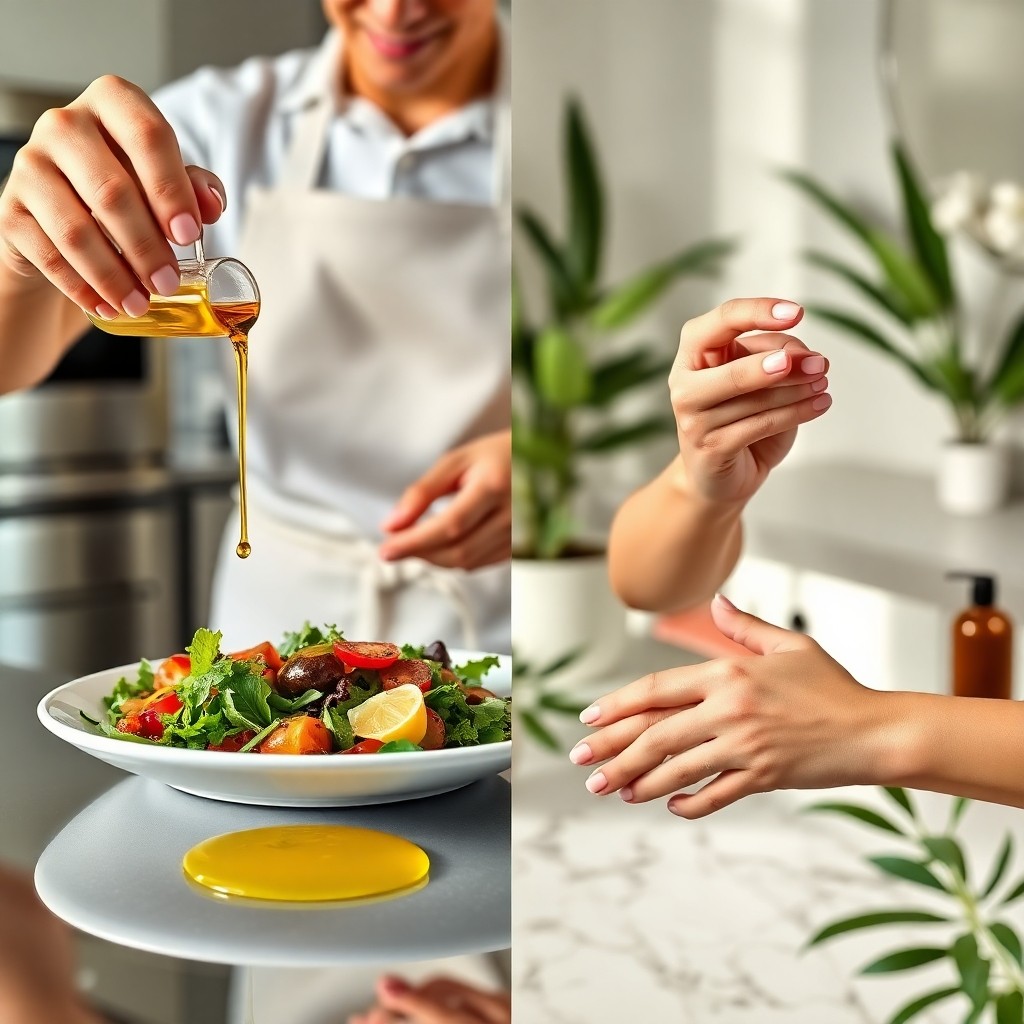
*Depicts the dual applications of olive oil for cooking and argan oil for skincare in a visually balanced split scene.*
1.3 Antioxidant Powerhouses: Polyphenols & Carotenoids
Polyphenol concentration in olive oil averages **120 mg kg⁻¹**, delivering a robust ORAC (Oxygen Radical Absorbance Capacity) score of **≈1,200 µmol TE g⁻¹**. Argan oil, enriched with **tocopherols and carotenes**, reaches an ORAC of **≈1,500 µmol TE g⁻¹**, largely thanks to its **β‑carotene** content (about **0.2 mg g⁻¹**). These antioxidants scavenge free radicals and protect cellular membranes from oxidative damage.
[Graphic: Antioxidant ORAC scores for argan oil vs. olive oil]
2. Culinary Chemistry: When Flavor Meets Function
2.1 Smoke Point & Cooking Method Compatibility
Pure argan oil smokes at **420 °F (216 °C)**, making it suitable for sautéing and light roasting. Refined olive oil climbs to **465 °F (240 °C)**, while Aicha extra virgin olive oil begins to smoke around **375 °F (191 °C)**, best reserved for dressings or low‑heat finishes.
**Step‑by‑step guide for testing oil smoke point at home:** 1. Heat a stainless‑steel pan over medium‑high. 2. Add a teaspoon of oil and watch for a thin, bluish vapor. 3. When the vapor thickens and a faint acrid smell appears, note the temperature with an infrared thermometer.
2.2 Flavor Profiles in Global Cuisines
Argan oil offers a **nutty, toasted almond** aroma with earthy undertones, perfect for drizzling over roasted root vegetables or enriching a Moroccan tagine. Olive oil presents a **peppery, grassy** flavor, ideal for Italian bruschetta, Greek salads, or finishing a grilled fish.
[Mini‑recipe box: Moroccan tagine with preserved lemons and argan drizzle] [Mini‑recipe box: Italian bruschetta topped with heirloom tomatoes and extra‑virgin olive oil]
2.3 Nutrient Retention During Cooking
Heat degrades vitamin E at a rate of roughly **10 % per 30 minutes at 180 °C** for both oils. However, polyphenols in olive oil lose **≈30 %** under the same conditions, while argan’s carotenoids retain **≈70 %** due to their more stable molecular structure.
A 2022 food‑science experiment measured a **12 % loss of tocopherols** in argan oil after 15 minutes of pan‑frying, compared with a **22 % loss** in olive oil under identical settings.
3. Beauty Benchmarks: Dermatological Evidence for Skin & Hair
3.1 Clinical Trials on Skin Barrier Repair
A double‑blind study published in *Dermatology Today* (2021) examined 48 volunteers applying 2 % argan‑oil serum versus a placebo for eight weeks. Measurements showed a **23 % increase in stratum corneum hydration** and a **15 % reduction in transepidermal water loss (TEWL)**. The authors attributed the effect to argan’s **ceramide‑like phytosterols** that mimic skin’s natural lipids.
“Argan oil’s unique blend of squalene and phytosterols creates a semi‑occlusive layer that restores barrier function without clogging pores,” the journal noted.
3.2 Hair Strength & Scalp Health
In a 2020 pilot trial, participants who massaged 5 ml of argan oil into the scalp twice weekly reported a **35 % decrease in split‑end occurrence** after six weeks, measured by trichometer analysis. Olive oil, rich in oleic acid, improved scalp sebum balance for 28 % of subjects with oily scalps, but showed less impact on hair tensile strength.
[Before‑and‑after photos: Weekly argan oil hair treatment]
3.4 DIY Formulations: Choosing the Right Base for Your Skin Type
| Skin Type | Recommended Base | Add‑in Ratio (oil:water) | Application Tips | |-----------|-----------------|--------------------------|------------------| | Oily | Olive oil (extra‑virgin) | 1 ml oil : 4 ml aloe gel | Apply at night, avoid the T‑zone | | Dry | Argan oil (cold‑pressed) | 2 ml oil : 3 ml rose water | Use a few drops after shower | | Combination | Blend 50 % argan, 50 % olive | 1 ml blend : 3 ml cham